Lore Compendium
THE WORLD
The empire of Muntu spans Earth and beyond — seven houses, a living metal, a colony on Mars, dream walkers, and a wasteland beyond the wall. This is the full record.
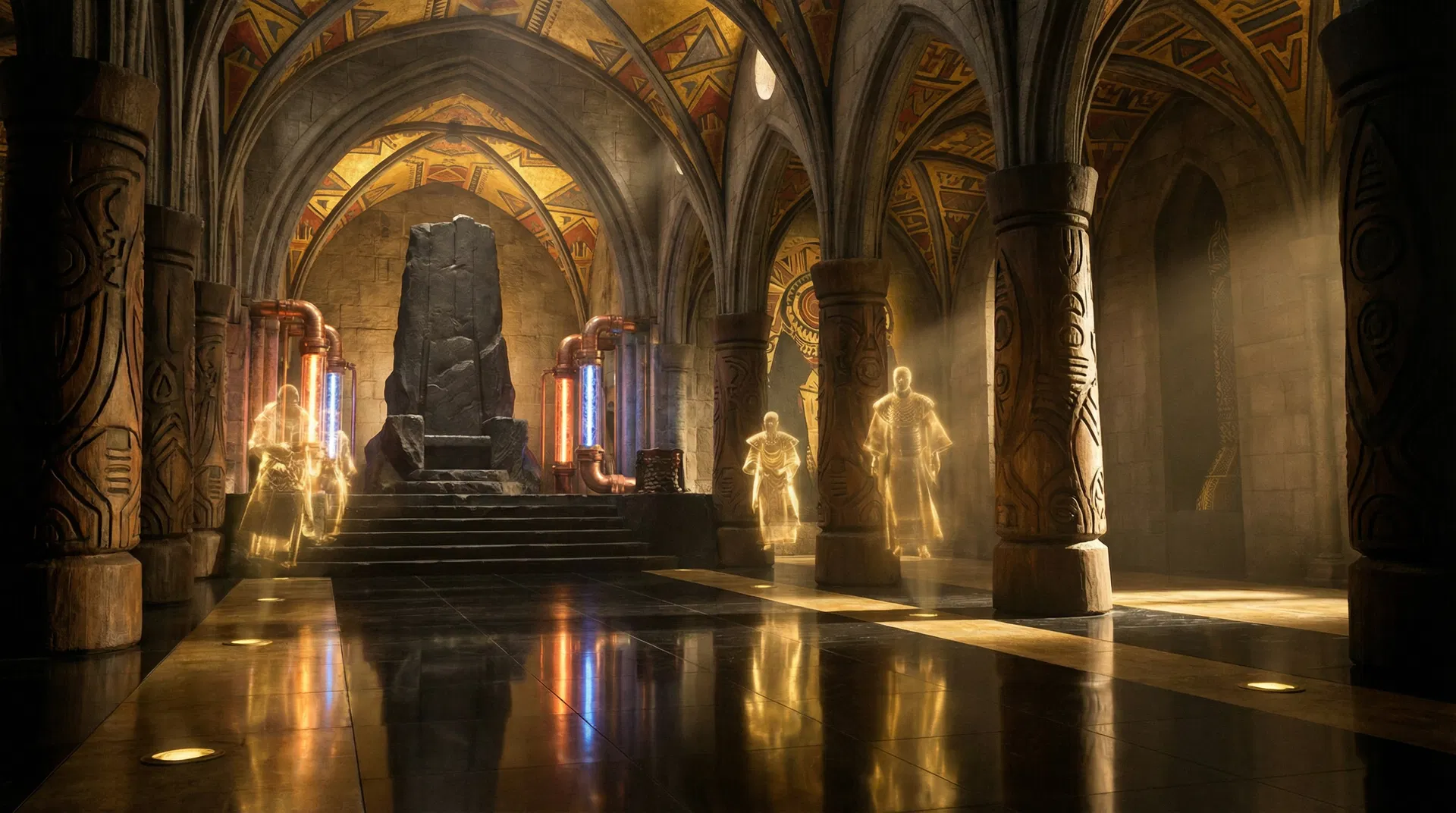
THE THRONE
OF MUNTU
"The Throne exists to maintain balance among the Seven Nganda. No Nganda rules Muntu — only the Throne does."
— Royal Protocol of the Throne of Muntu™
The Royal Protocol defines how power is exercised when any of the Seven Nganda ascends to the Throne. It ensures the Sovereign governs not as a representative of her Nganda, but as the unifying authority over all of Muntu.
The Throne is Above All Nganda
Upon ascension, the Sovereign relinquishes visible allegiance to her Nganda and becomes the embodiment of Muntu itself. She is no longer of her Nganda — she is of the nation.
Power is Absolute, But Structured
The Sovereign holds full executive authority, but must operate within established constraints that preserve balance. No single Nganda may dominate military command, political influence, or appointments.
The Council of Matriarchs
Composed of the six non-ruling Nganda, the Council serves as the primary balancing body of the Throne. It holds the sole authority to remove a Sovereign — a power requiring unanimous agreement to prevent political abuse.
The Root & The Canopy
Upon ascension, the Sovereign's Nganda becomes the Root. The nation becomes the Canopy. The Sovereign belongs to Muntu, not to her Nganda. No Nganda rules Muntu — only the Throne does.
The Seven Nganda
The empire is governed through seven elite Nganda, each with distinct cultural identity, internal governance, and a unique philosophy of power. They rotate or compete for dominance over the Throne through the Trials of Muntu.
Council of Matriarchs
Composed of the six non-ruling Nganda, the Council is the primary balancing body of the Throne. It holds the sole authority to remove a Sovereign — requiring full unanimous agreement. Dethronement is rare, ceremonial, and preserves the dignity of the Throne.
The Nzali Order
Independent spiritual advisors summoned only when needed for spiritual or unseen matters. They hold no political authority and cannot influence governance decisions or succession. Their presence is controlled, limited, and purely advisory.
Court Conduct
- ▸
Strict etiquette governs all interactions within the Throne
- ▸
The Sovereign is addressed by universal titles — never by Nganda identity
- ▸
Rank is communicated through behavior, posture, and protocol — not force
- ▸
All Nganda representatives must conduct themselves as servants of Muntu, not of their Nganda
Sovereign Identity
- ▸
Upon ascension, the Sovereign's Nganda becomes the Root
- ▸
The nation becomes the Canopy — she belongs to Muntu, not her Nganda
- ▸
Visible allegiance to any Nganda is relinquished at the moment of ascension
- ▸
The Sovereign embodies the whole of Muntu — its past, its present, its future
THE TRIALS OF MUNTU
The Throne of Muntu is contested in Mukalenga Prime through the Trials of Muntu — a three-part succession contest designed to ensure no incompetent, cowardly, or spiritually hollow leader ever sits on the Throne. The founders of Muntu looked at the republics that came before them and saw leaders who hoarded wealth, abandoned their people, and cowered behind protected walls when adversaries came. The Trials were built as the permanent answer to that failure.
The Intellectual Trial
Muntu will never again be governed by the incompetent. The leaders of the old republics sought wealth for themselves and not for the collective — they were educated men who used their knowledge as a weapon against their own people. The Intellectual Trial tests whether a contender understands governance, history, economics, and the needs of the collective. A Sovereign must be able to think for Muntu, not merely for herself.
The Spiritual Trial
Spirituality has always been part of African life and always will be. The founders of Muntu did not believe a leader could govern the people without respecting what the people hold sacred. The Spiritual Trial does not demand that the Sovereign share any particular faith — it demands that she respect the spiritual life of Muntu, understand its ancestral traditions, and never use power to diminish what the people believe.
The Physical Trial
If adversaries ever come to Muntu, the Sovereign will not cower behind a protected shelter. The African spirit demands that a leader stand with her armies — not behind them. The Physical Trial tests whether a contender has the strength, endurance, and courage to lead in battle. A Sovereign who cannot fight cannot command the respect of those who must die for her. This is not negotiable.
Dethronement Protocol
Activated only in cases of severe failure or abuse of power. Executed by the Council of Matriarchs — requiring full consensus to proceed. Removal is ceremonial and preserves the dignity of the Throne, deliberately avoiding instability or cycles of retaliation.
THE SEVEN
NGANDA
Nganda — Bemba for "House" · Nganda Ya — "House of"
Seven elite Nganda, each with distinct cultural identity, internal governance systems, and unique philosophies of power. They rotate and compete for dominance over the Throne of Muntu — but when one rules, all must submit to the higher doctrine.
Military & Defense
Nganda Ya Ndlovu
The Unbreakable
TAP TO REVEAL ↓
Moyo Ferum & Technology
Nganda Ya Elyrion
The Awakened
TAP TO REVEAL ↓
Governance, Law & Elite Guard
Nganda Ya Kuyiko
The Architects of Order
After the civil war between republic loyalists and royalists, it was Nganda Ya Kuyiko that designed the system of rotational monarchy — a governance structure rooted in cultural memory and reimagined traditional leadership. They are the architects of the Royal Protocol itself. Of the ten monarchs in Muntu's 230-year history, six have come from Kuyiko — more than any other Nganda combined.
Kuyiko is strictly patriarchal. Only men can rule. Leadership is proven through combat — the Trials of Muntu are structured around the kind of physical and strategic dominance that Kuyiko trains its men for from birth. Polygamy is practiced and accepted within the Nganda. Queen Consorts hold real power — they are strategic, influential, and far from submissive — but outsiders who marry into Kuyiko must fully assimilate into its culture. There is no middle ground.
Kuyiko is also home to the most elite and storied warrior unit in the empire: the Vitiligo Archers. Born with vitiligo — a condition that once drew fear and superstition — these women were nearly exiled to the Red Verge. King Asande, whose own mother bore vitiligo, intervened with a royal decree: every girl born with vitiligo would be trained as an archer and mixed martial artist, transforming the persecuted into the protected — and the protected into the most feared warriors in Muntu. King Asande is the current ruler. His daughter is said to be challenging Kuyiko's male-only succession — a tension that has no precedent in the Nganda's history.
King Asande's Decree
"Every girl born with vitiligo shall be trained as an archer and a warrior. What others feared, Muntu shall honour."
TAP TO REVEAL ↓
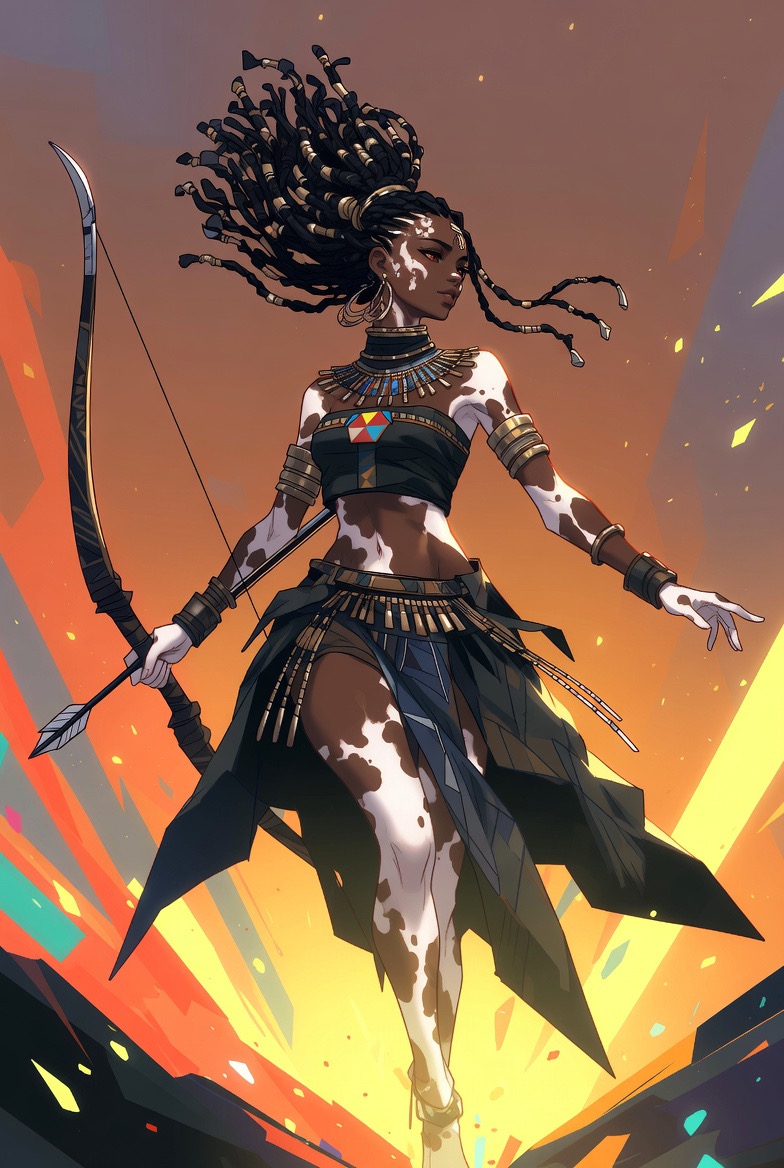
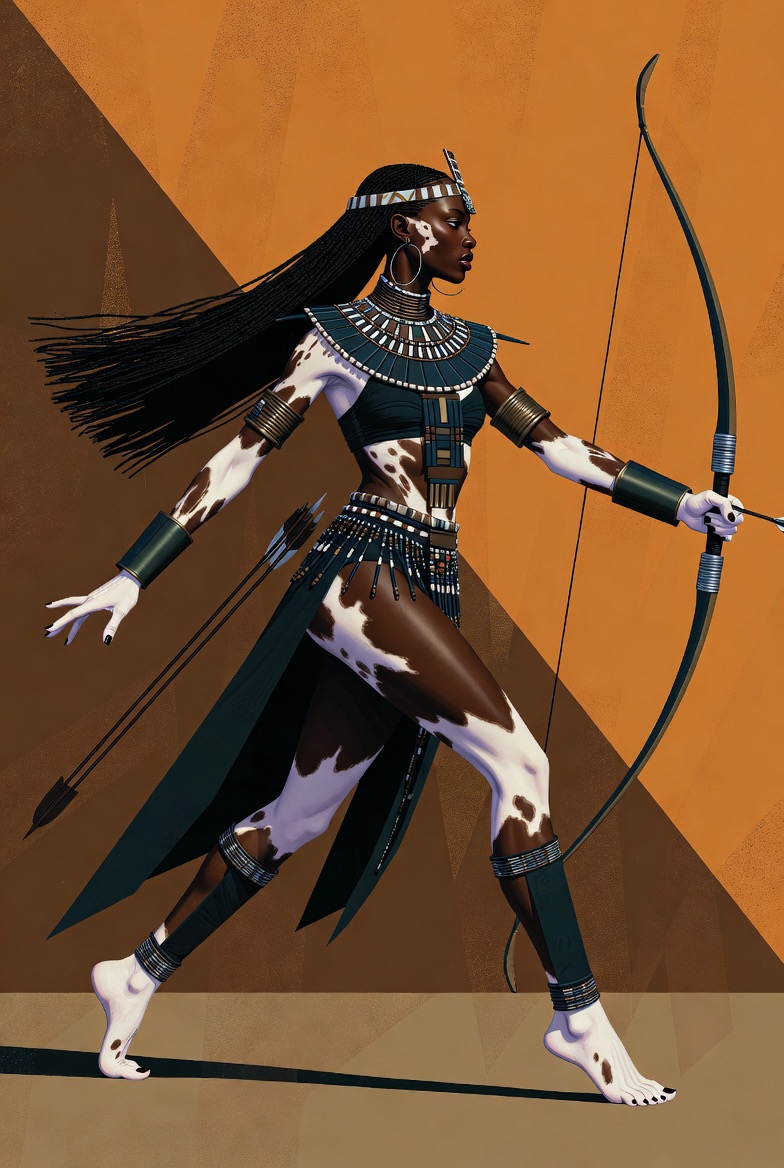
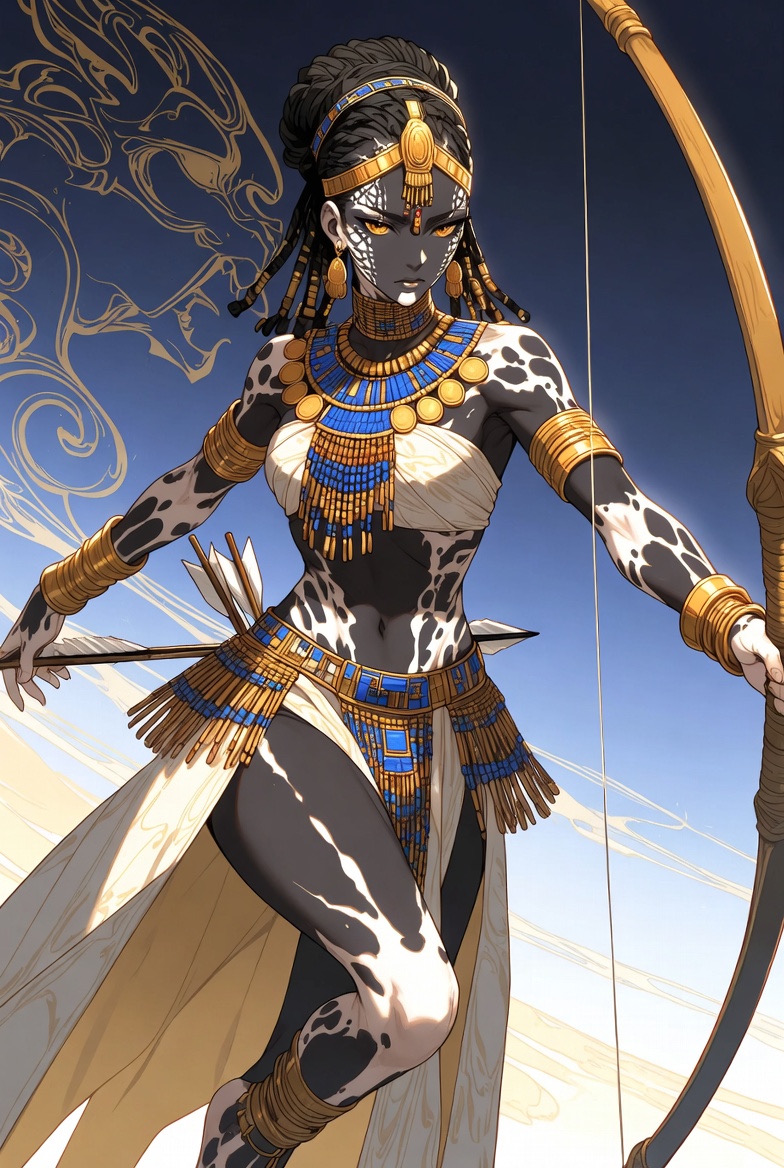
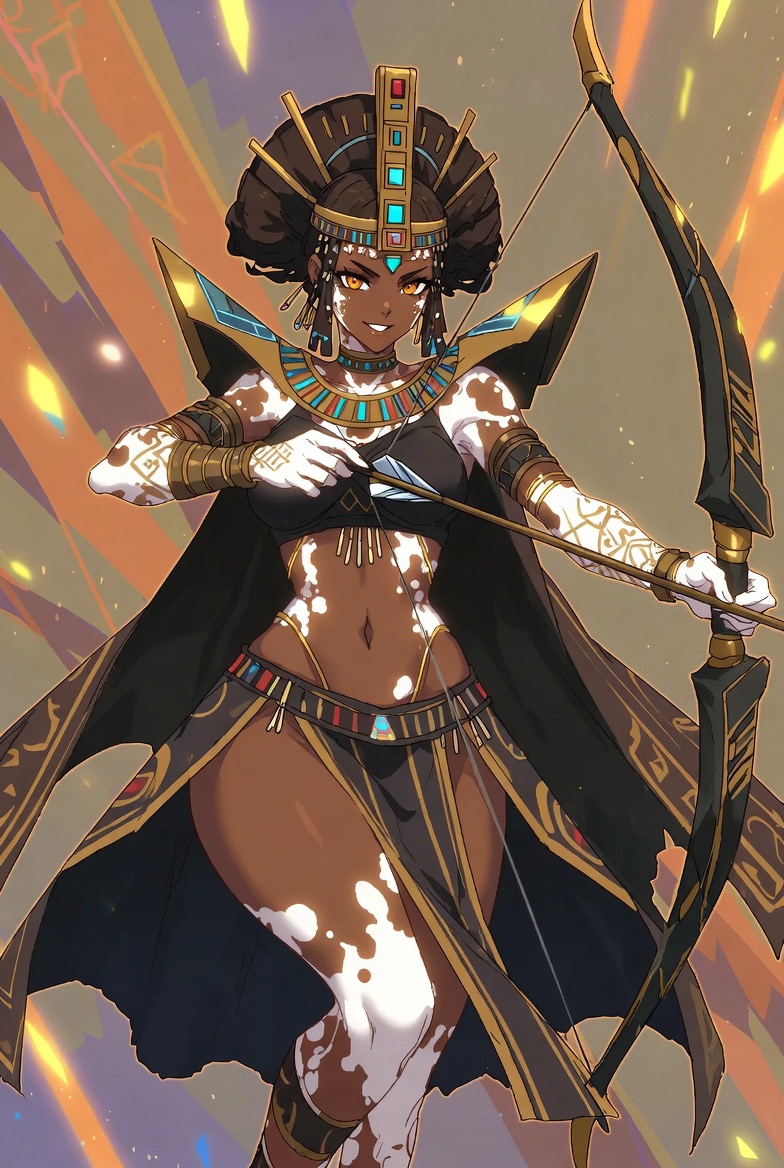
Vitiligo Archer Corps
The Windborn
The Chosen
Agriculture, Diplomacy & Sanctuary
Nganda Ya Khaleni
The Indispensable
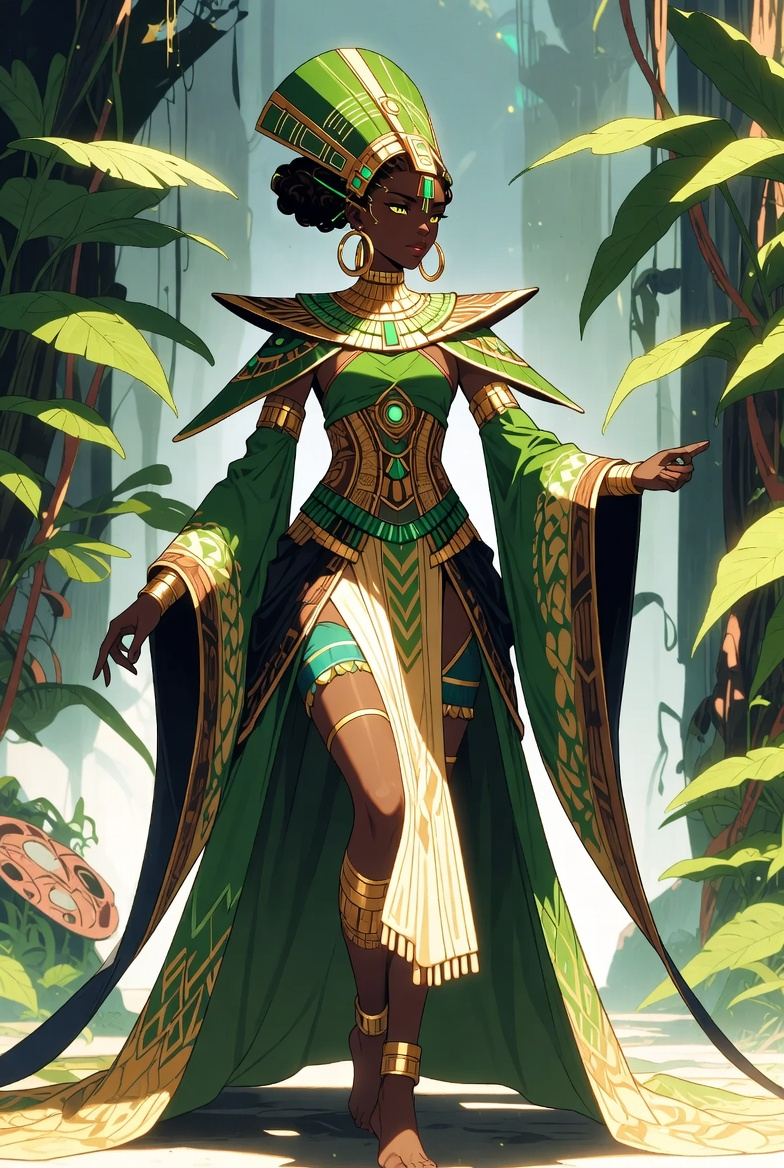
Nganda Ya Khaleni was not born from conquest — it was born from a queen's conscience. During the Founding Civil War, a community of believers fleeing persecution petitioned the reigning king for sanctuary. He refused. His Queen Consort, Queen Shatani, herself a believer, invoked ubuntu: "A king who rules only some of his people has already divided his kingdom." The crown relented. Land was granted. Khaleni City was established — beginning as an underdeveloped refuge and becoming, over generations, one of the most strategically vital civilizations in the empire. Queen Shatani is revered across all Nganda as the moral root of Khaleni — the reason it exists.
Khaleni's power is not military. It is not financial in the conventional sense. It is agricultural and logistical. They are the empire's food system — farming tomatoes, African bird's eye chili, and large-scale sustainable crops that feed both Earth and off-world populations. When Muntu expanded to the Moon Base and Nyekundu (Mars), Khaleni solved the problem no other Nganda could: food preservation beyond Earth. Traditional methods failed under vacuum conditions, long-duration transport, and radiation exposure. Khaleni's advanced preservation system — still considered proprietary — keeps food viable across all of Muntu's off-world territories. Without it, Muntu's expansion would have stalled.
Queen Shatani's Invocation
"A king who rules only some of his people has already divided his kingdom."
TAP TO REVEAL ↓
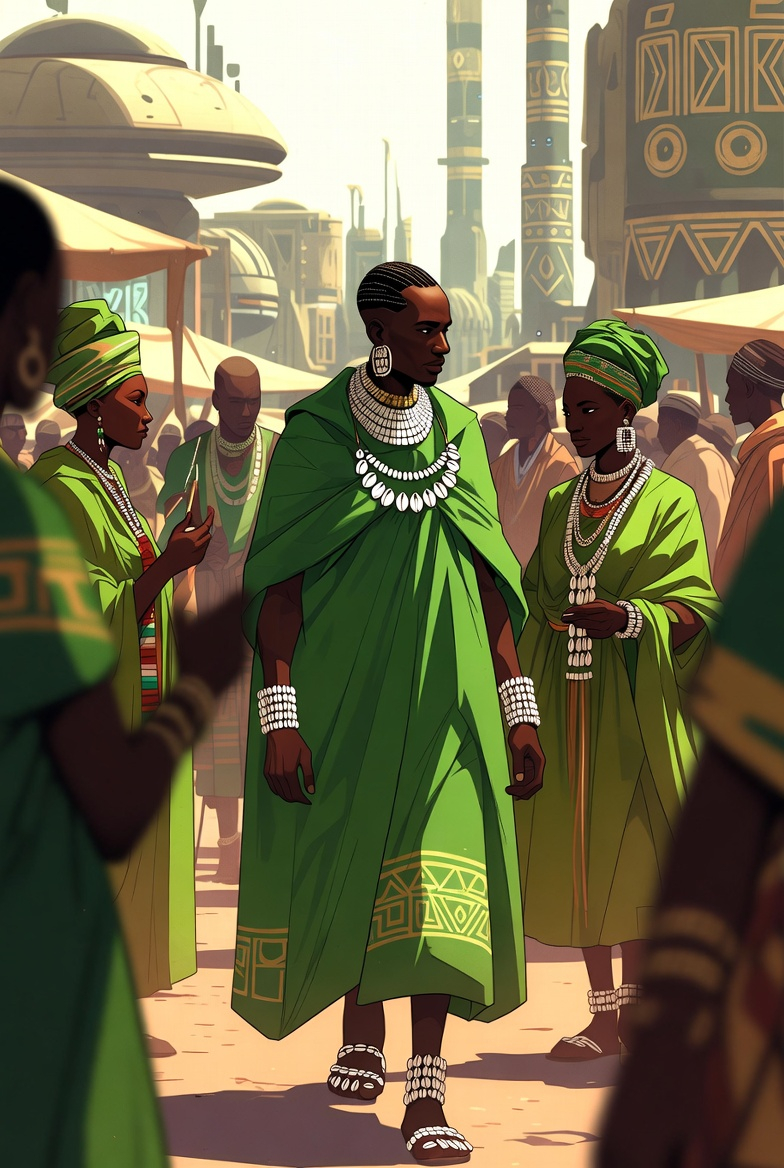
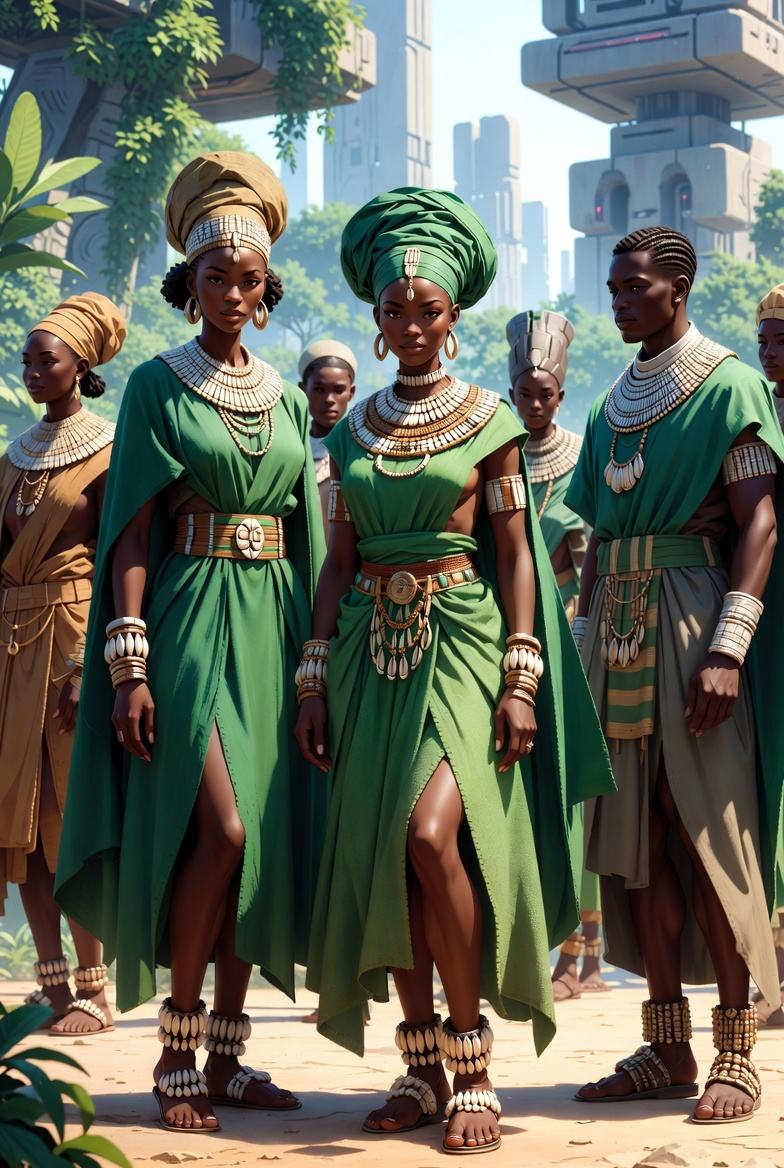
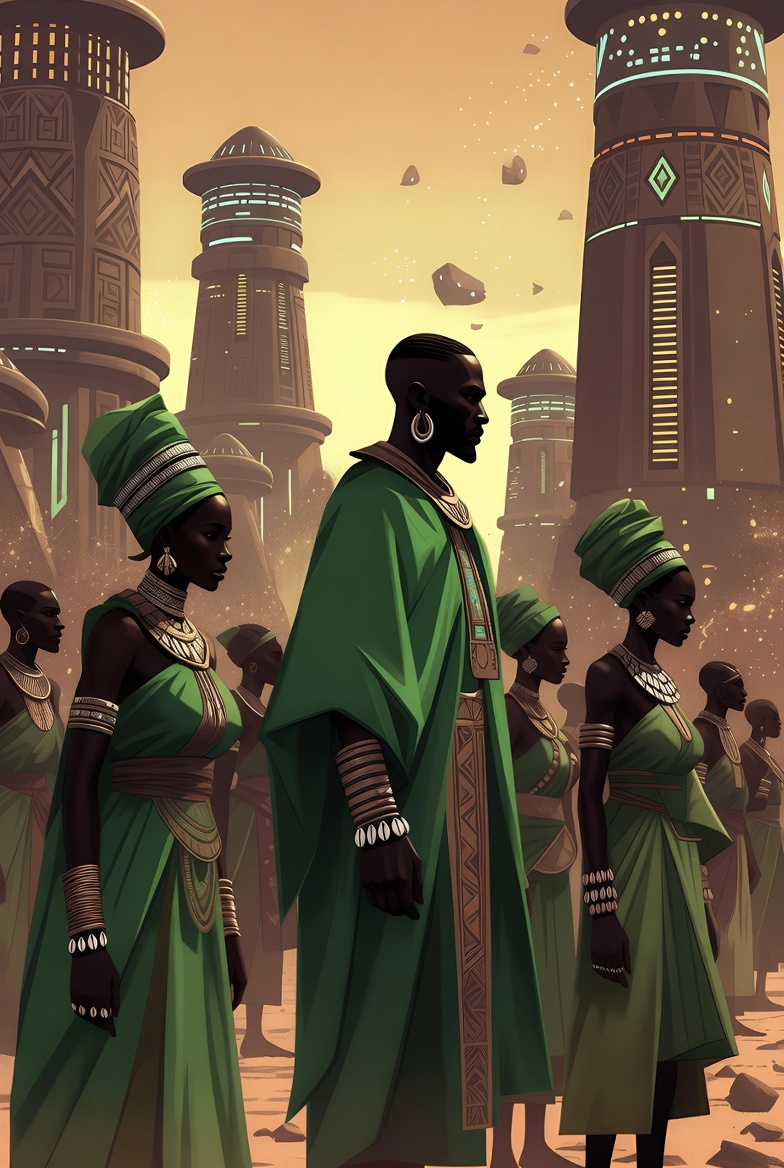
Nganda Ya Khaleni
The Khaleni Market — Heart of the Sanctuary City
Sanctuary City
Sovereign Matriarchy & Political Governance
Nganda Ya Tao
The Matriarchs of Deliberate Power
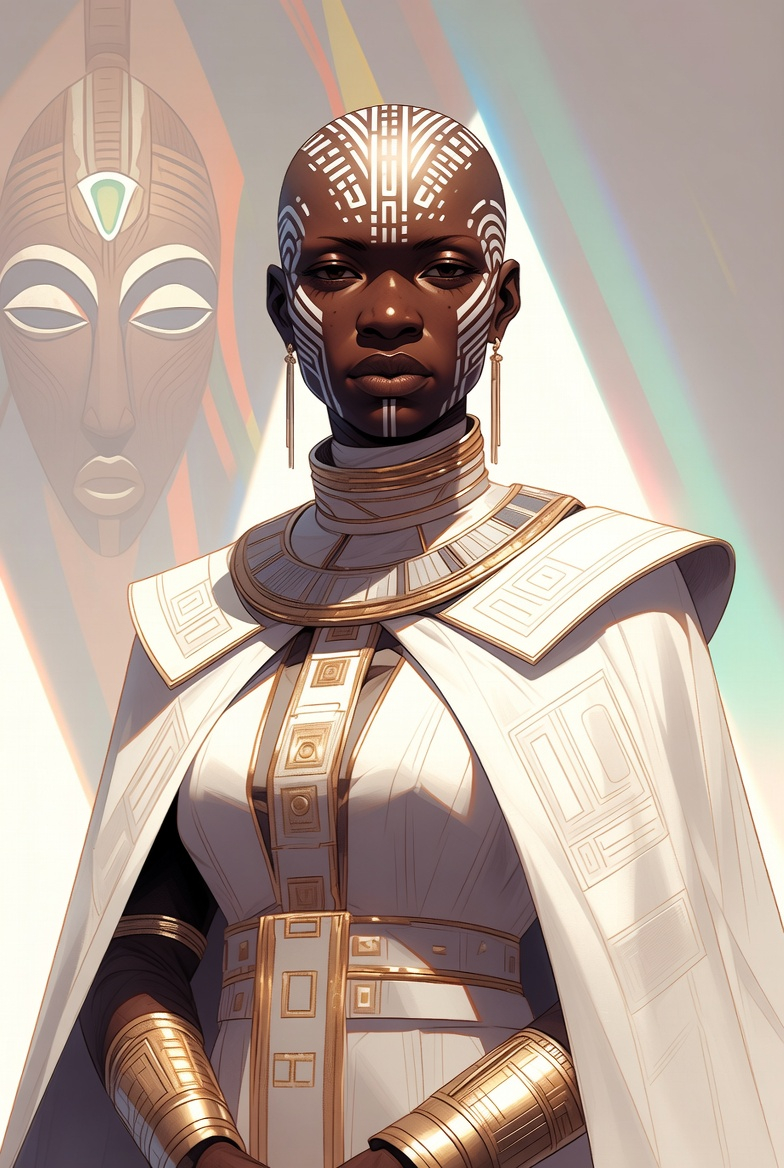
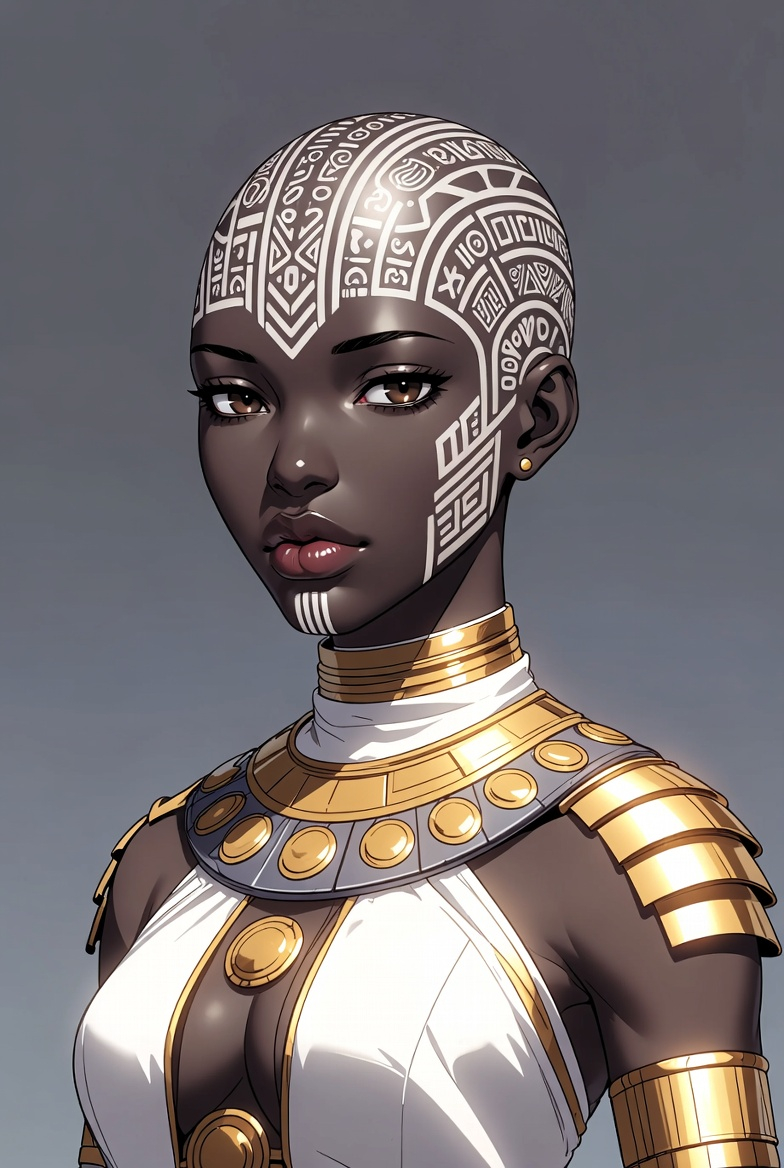
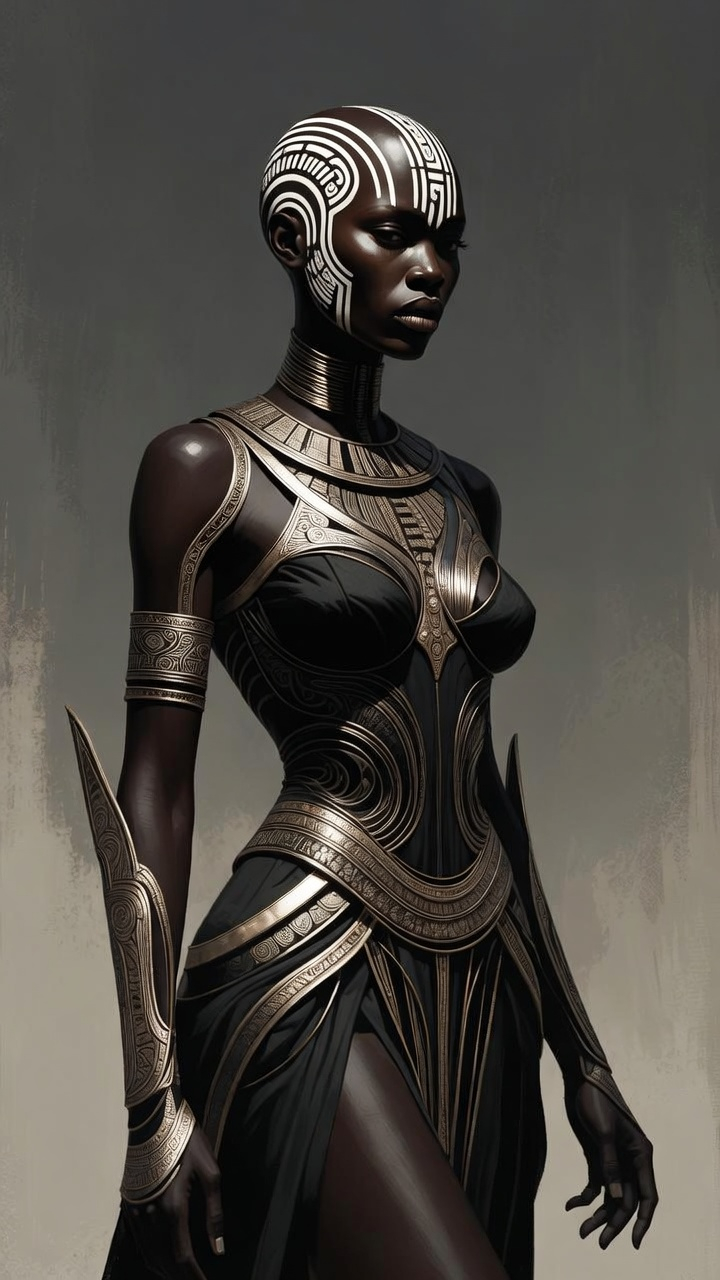
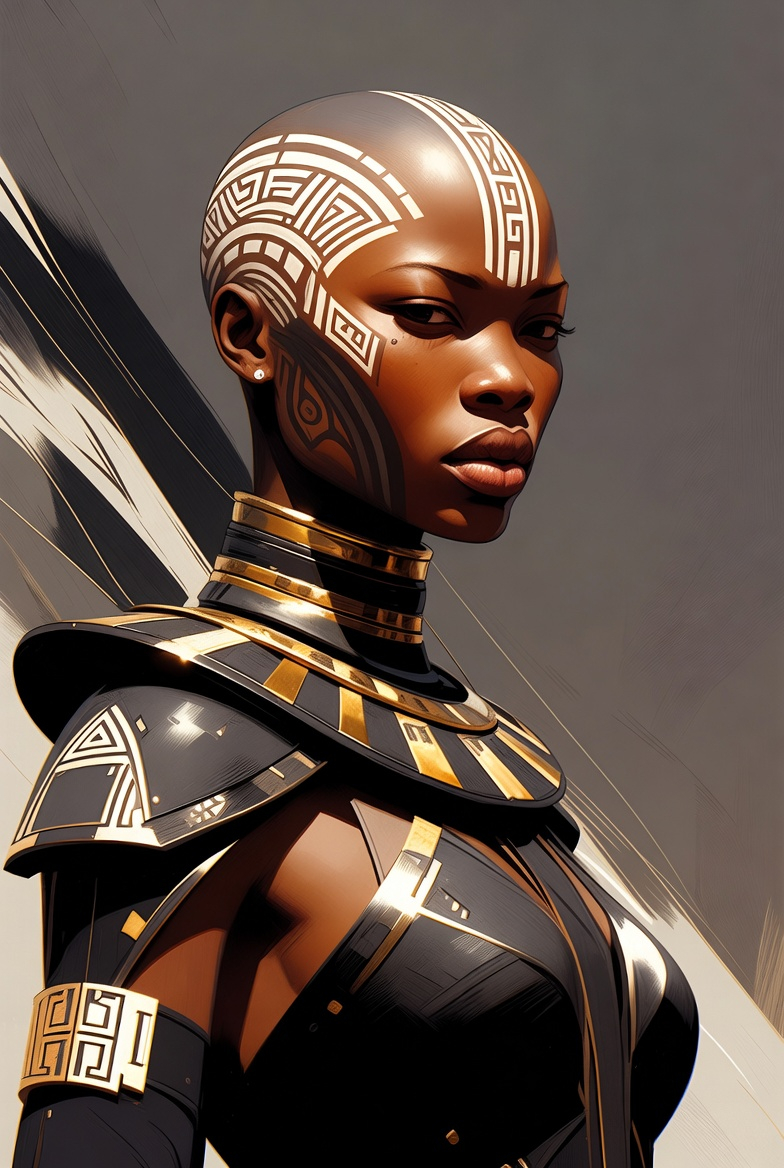
Nganda Ya Tao is built on a single sovereign principle: women must be visibly central to power. It is not anti-male — men hold influence as advisors, generals, and strategists — but sovereign authority is intentionally embodied by one woman: the Matriarch. She is the only eligible representative of Tao for the Throne of Muntu, always marked by three defining traits: a shaved head, white and gold regalia, and a white ink tattoo of her own unique design, visible at all times. Every woman who enters training for the Matriarch seat is shaved bald — a mark of commitment and equality. All candidates begin the same. From the full field of contenders, three are selected to advance to the Final Cut: the most capable, the most tested, the most ready. These three are painted with a temporary white paint — a visible declaration that they are in contention for the highest seat in Tao. When one of the three wins, she ascends to Matriarch. Her white paint is then made permanent: she chooses a unique design and it is tattooed in white ink across her skin. The design is entirely her own — no two Matriarchs have ever worn the same mark. She carries it until she dies or willingly surrenders her seat to allow the next Matriarch to rise. The black mark is the inverse of everything the white represents. When a candidate or sitting Matriarch breaks Tao's values and doctrines — bringing shame upon the Nganda — the white paint or white ink is not simply removed. It is replaced. They are marked with black ink as a permanent declaration: this person has been deposed. Whether they were a contender or a ruling Matriarch, the black ink means the same thing. They are stripped of standing, stripped of title, and stripped of the right to ever hold either again. It is not a punishment that can be served and completed. It is a permanent identity. In practice, Tao's role within the empire is advisory. They do not seek the Throne — they influence those who hold it. Their political power comes from counsel, moral authority, and the weight of their ancestral traditions. In 230 years of Muntu's history, only one Matriarch of Tao has ever ruled: Zara. Her ascension was not a violation of Tao's values — it was an extraordinary exception, born of extraordinary circumstances. No Matriarch of Tao has ruled since. The shadow of Zara falls across every contender. Leadership within Tao is not inherited — it is earned. Eligible contenders must prove themselves through structured internal competition. Bloodline grants access, not victory. Many Matriarchs choose not to have children to prevent the concentration of power and keep leadership open.
TAP TO REVEAL ↓
Nganda Ya Nzali
The Transcended — Ancestral Plane Entity
Dream Walkers
Spiritual Guidance, Ancestral Affairs & Dream Walking
Nganda Ya Nzali
The Dream Walkers
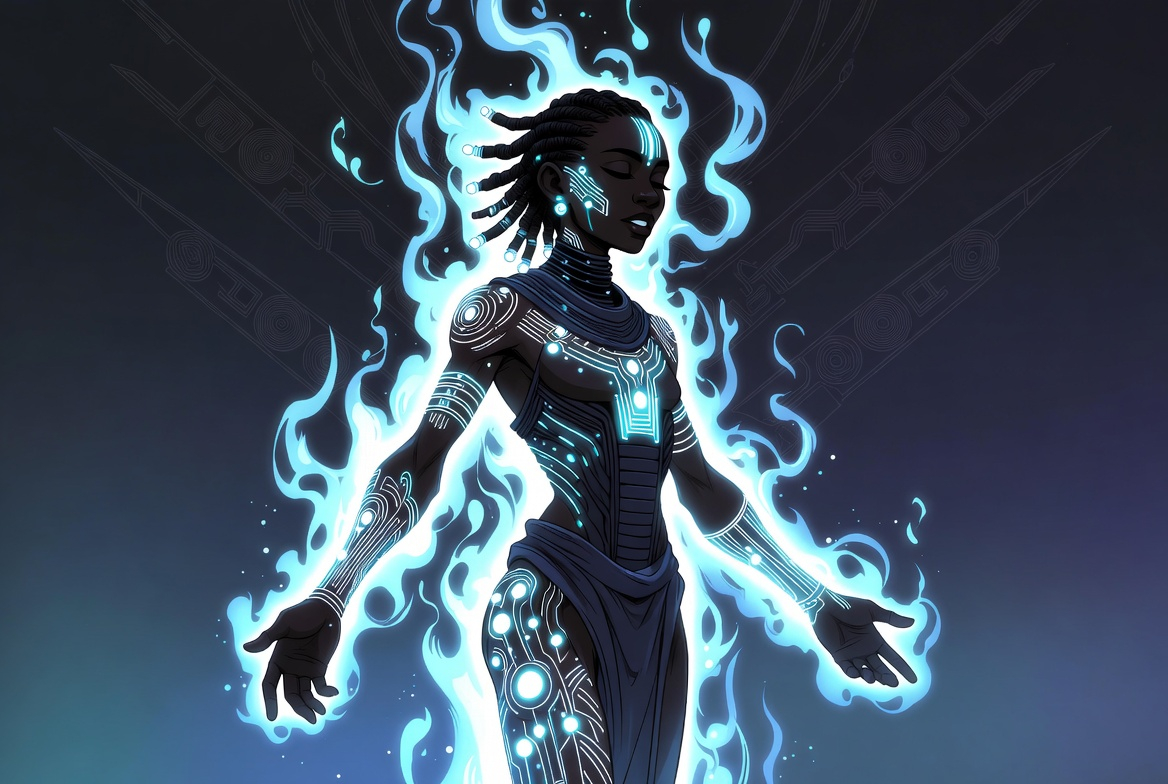
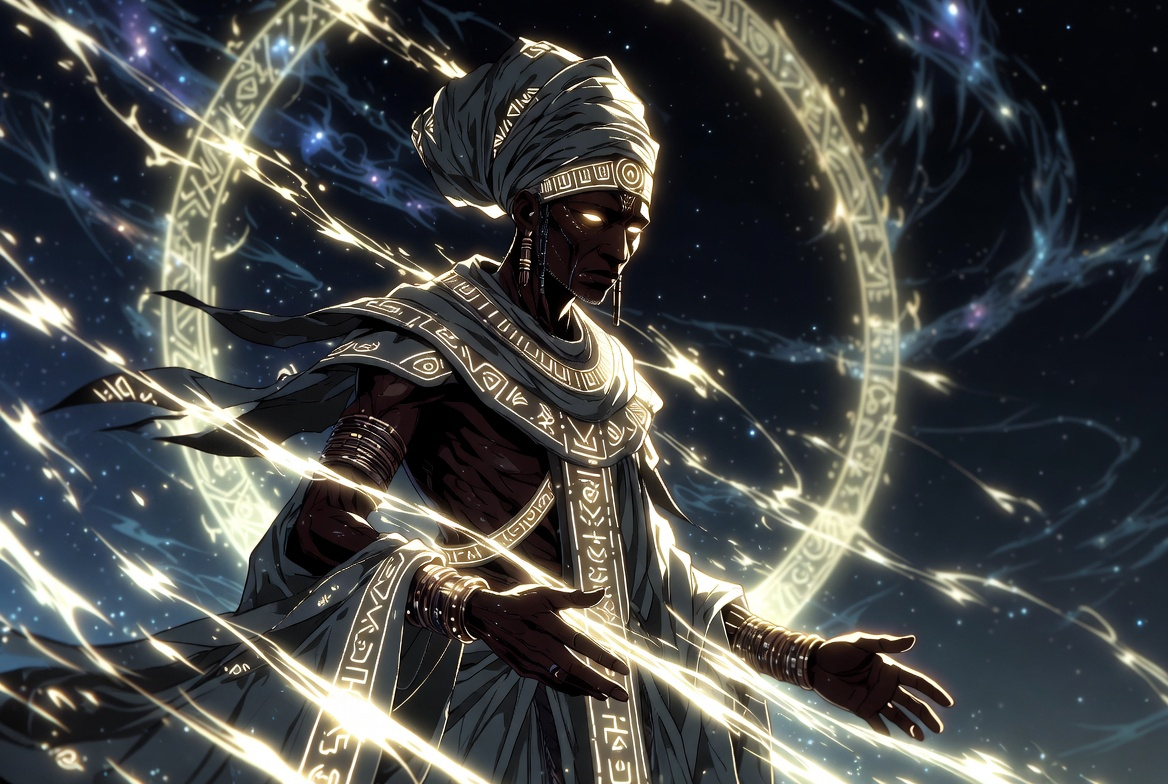
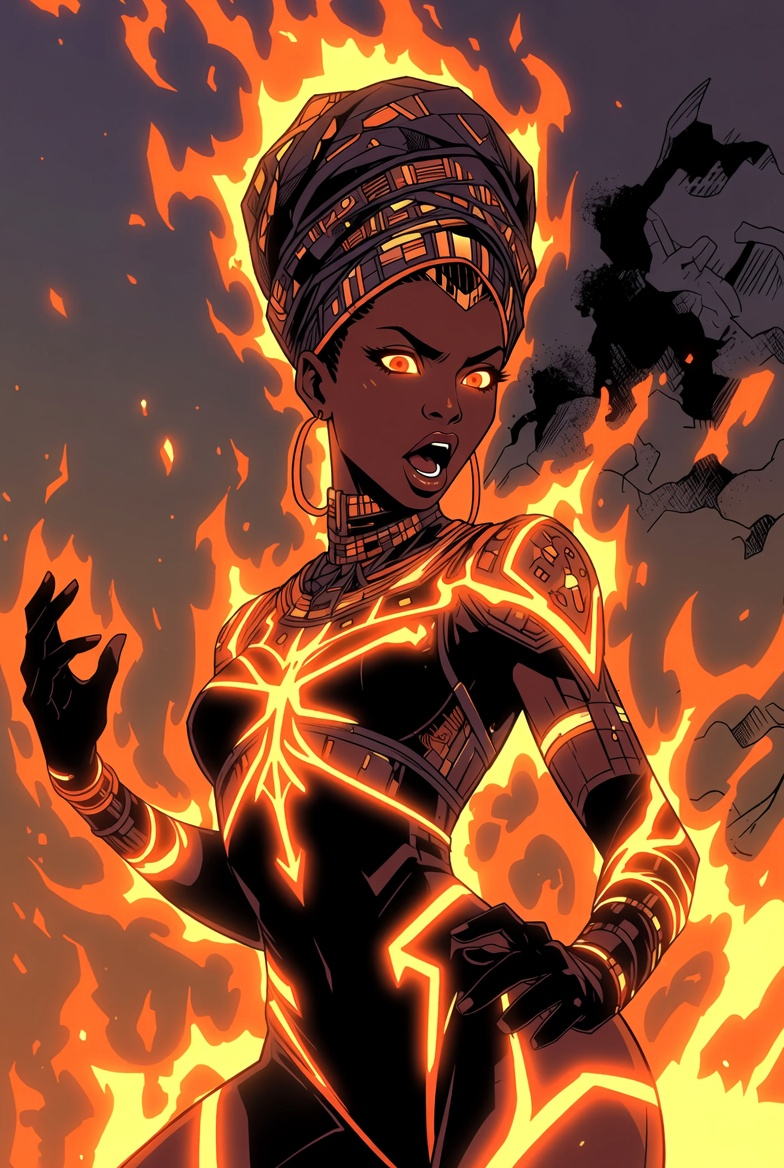
Nganda Ya Nzali are the Dream Walkers — the empire's oldest spiritual order, whose role has never changed in 230 years of Muntu's history: to advise, to guide, and to speak for the ancestors. They do not rule. They do not seek the Throne. By design and by doctrine, the Nzali believe that political power corrupts the spiritual clarity required to serve the empire honestly. Their influence is not governance — it is conscience.
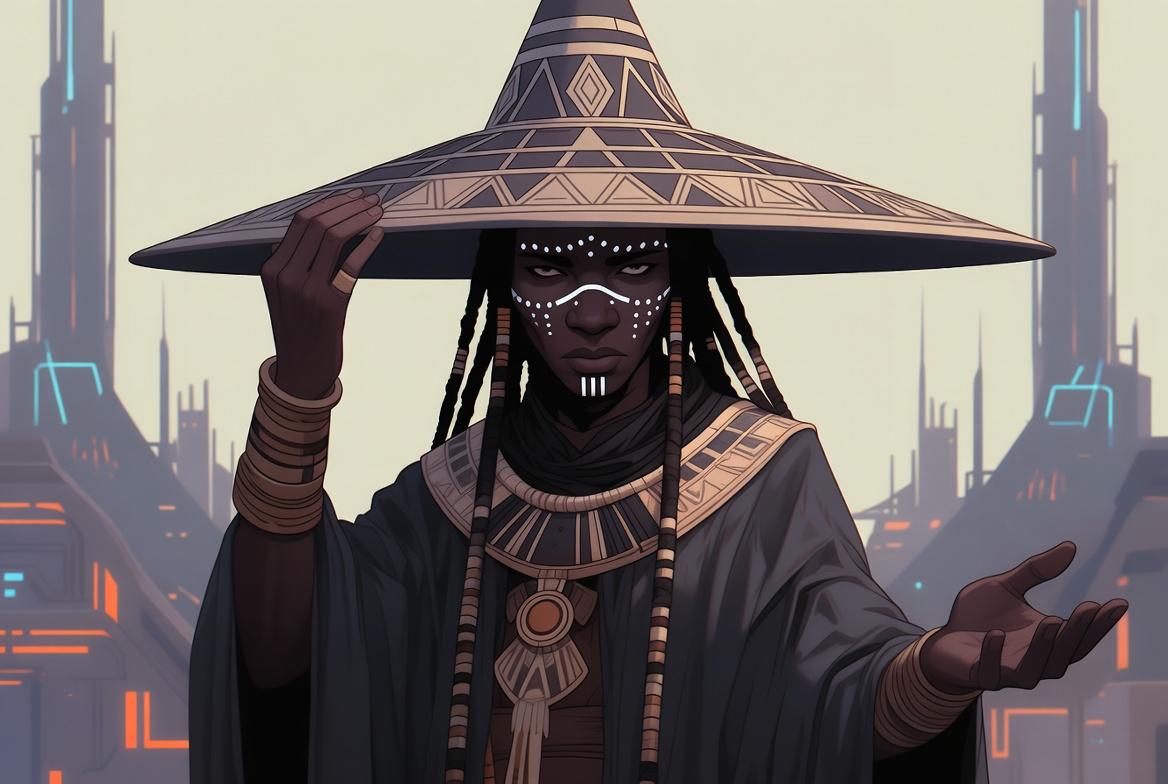
The Nzali represent the old ways of speaking to the ancestors. They believe the ancestors guide the spirit of the living, and that their sacred duty is to maintain that channel — pure, uncorrupted, and free from personal ambition. In the old days, the Nzali resolved that people had worked charms against one another, binding generations in cycles of poverty and harm. From that reckoning, they made a vow: their knowledge would only be used to advance Muntu and guide the families they were selected to serve. Any Nzali who practices dark arts, blood magic, or forbidden craft is disowned by the community and exiled to the Red Verge. It is considered high treason.
There are two tiers of Nzali practice. Family Nzali are community-chosen advisors — selected by families across all Nganda to provide spiritual guidance, ancestral interpretation, and counsel across generations. Royal Nzali sit in the imperial court, offering direct spiritual guidance to the sitting ruler. Their presence in the throne room is ancient and considered non-negotiable by tradition — until now.
The Transcendence
"The more a Nzali practices dream walking, the further they move between worlds. At a certain threshold, they may leave their body and enter the ancestral plane permanently — becoming a guardian spirit. Once they cross over, they cannot return."
TAP TO REVEAL ↓
Nganda Ya Mulilo
The Ishiwi — Keeper of Flame & Memory
Secretive Order
Memory, Archives & Oral Tradition
Nganda Ya Mulilo
The Undying Flame
Nganda Ya Mulilo is the empire's memory made flesh. They are the scribes, archivists, and oral historians of Muntu — the Nganda that ensures the empire never forgets what it was, even when war tries to erase it.
Their origin is rooted in loss. The Great War and the civil war that followed destroyed much of Mulilo's own history — their ancient texts, their sacred sites, their ancestral records. What survived was fragmented. What was lost was irreplaceable. From that devastation, Mulilo made a vow: no Nganda, no people, no civilization would suffer that erasure again. They dedicated their gifts entirely to preservation.
Today, Mulilo maintains the empire's living archive. They record history through both written and oral tradition — narrating, reciting, and performing the empire's chronicles in the ancient way, while simultaneously building technologies that preserve oral tradition for future generations: voice-capture systems, ancestral memory vaults, and cross-Nganda historical networks. They are the only Nganda with unrestricted access to the records of all other Nganda.
The Ishiwi
"The one who carries the flame." A title, not a name. The Ishiwi's true name is known only to those they trust completely — a sacred act in a Nganda that guards its secrets above all else.
TAP TO REVEAL ↓
THE RED VERGE
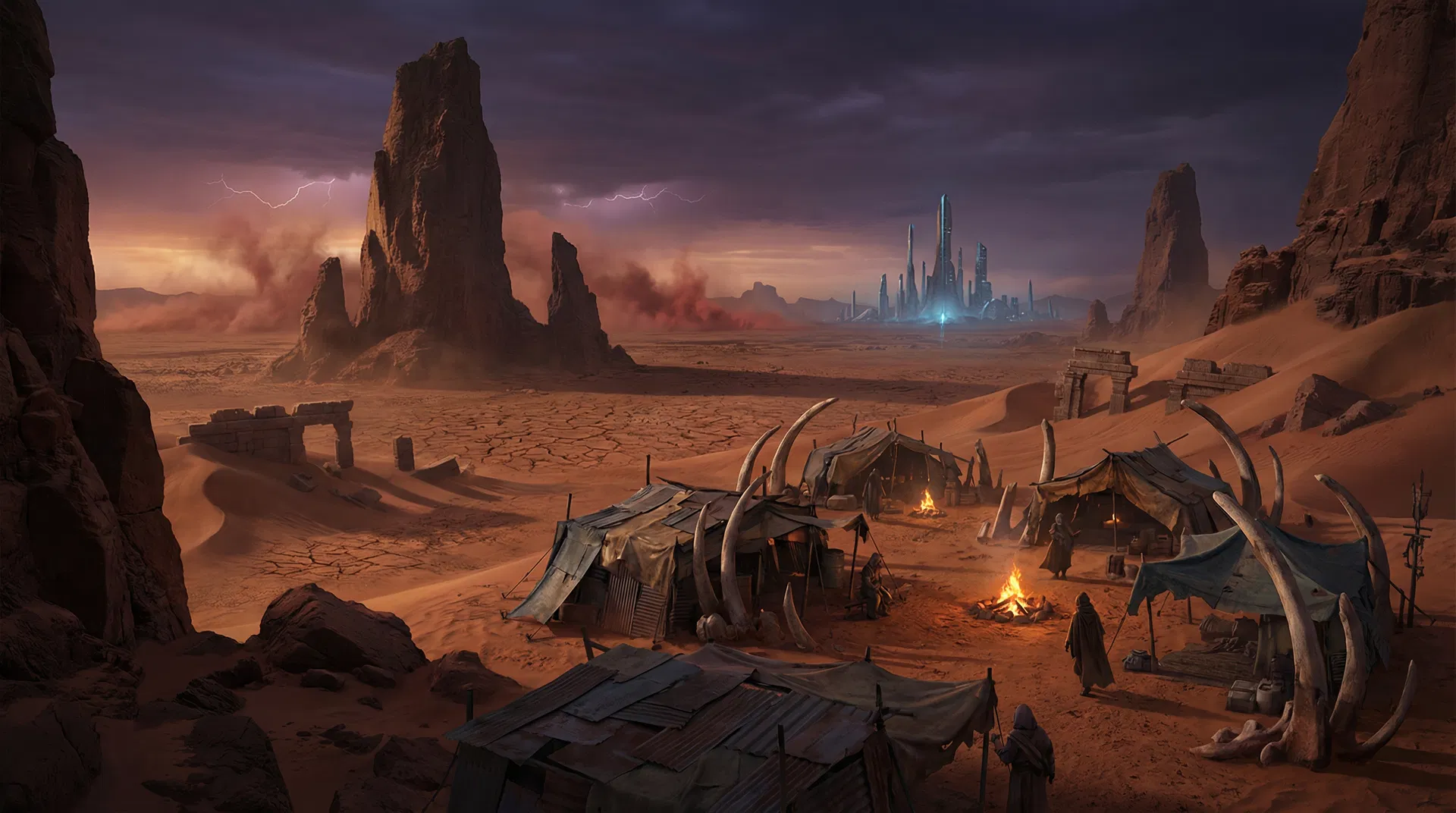
The Red Verge is not a Nganda. It is a wasteland — a vast, desolate desert territory beyond the empire's borders where the cast-out are sent and the forgotten survive. Outcasts, mutants, and those deemed undesirable by the empire's order are exiled here.
Among those who dwell in the Red Verge are Nzali who have strayed from the sacred order — practitioners of dark magic, those who have broken the ancestral covenant, and those whose power has been deemed a threat to the balance of the empire. The Red Verge is where the empire's conscience goes to die. Or to be reborn.
NYEKUNDU
THE MARS COLONY
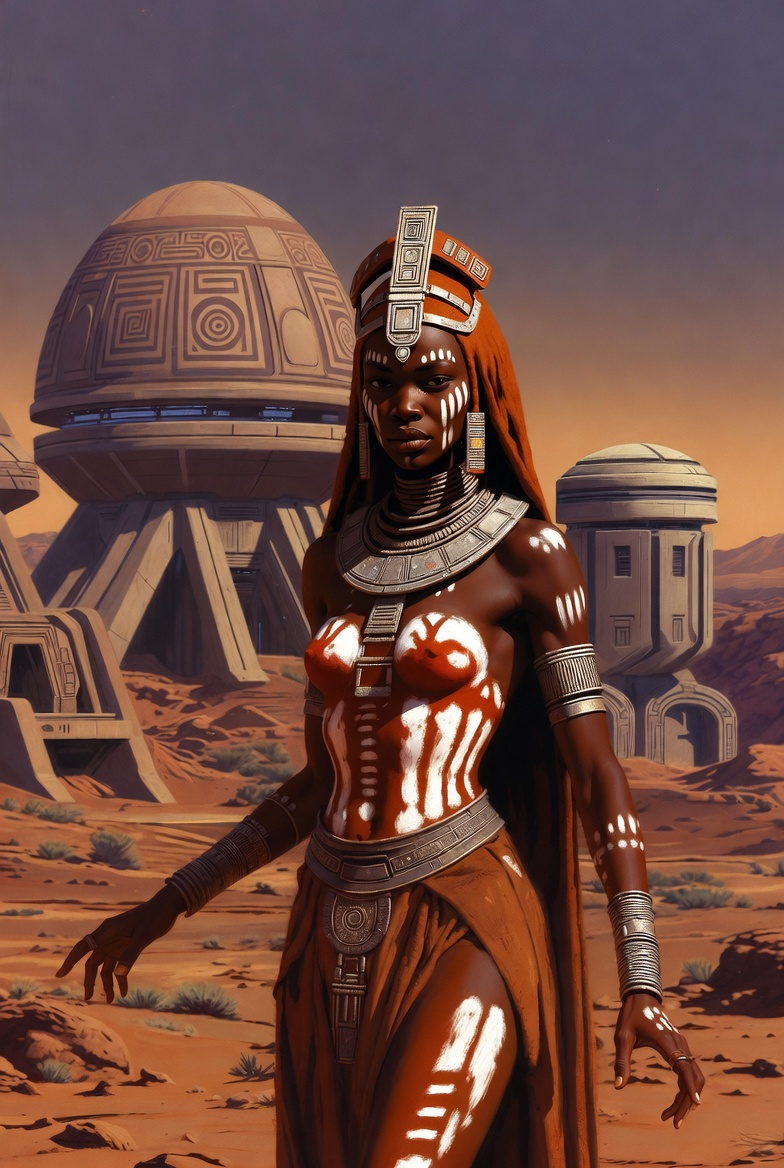
Nyekundu — Swahili for "Red" · Founded under the Red Queen · Himba Descent
Born as a colony, Nyekundu became a civilization. Its people no longer look to Earth for identity — they look to the red horizon of Mars, and to the woman who first dared to stand upon it.
The Founding
Nyekundu was founded under the vision of a revolutionary Queen Consort known as the Red Queen — a woman of Himba descent whose forward-thinking ideology reshaped the future of Muntu beyond Earth. Though not a ruling monarch, she wielded significant influence through her husband, King Abenu, leveraging his support to rally Muntu's wealthiest elites and leading scientists.
The colony was initially established as part of Muntu's expanding interplanetary network — a critical node in the transport and protection of the rare living metal sourced from Elyrion. Over time, it transformed from a logistics outpost into a distinct civilization with its own political identity.
A Colony Becomes a Nation
Unlike Muntu, Nyekundu developed as a constitutional monarchy — royal authority exists but is balanced by structured governance. King Abenu's presence on Mars remained largely ceremonial while political systems evolved to accommodate a more modern, multi-national society.
Its people — many born on Mars — no longer identify as Muntu, but as Martians. A culture has emerged that blends multiple Earth origins with new planetary realities. Few maintain direct ties to Muntu, and an increasing number have never set foot on Earth.
"The Earth gave us life. Mars will give us freedom. These are not the same gift."
— The Red Queen, Queen Consort of Muntu · Founder of Nyekundu
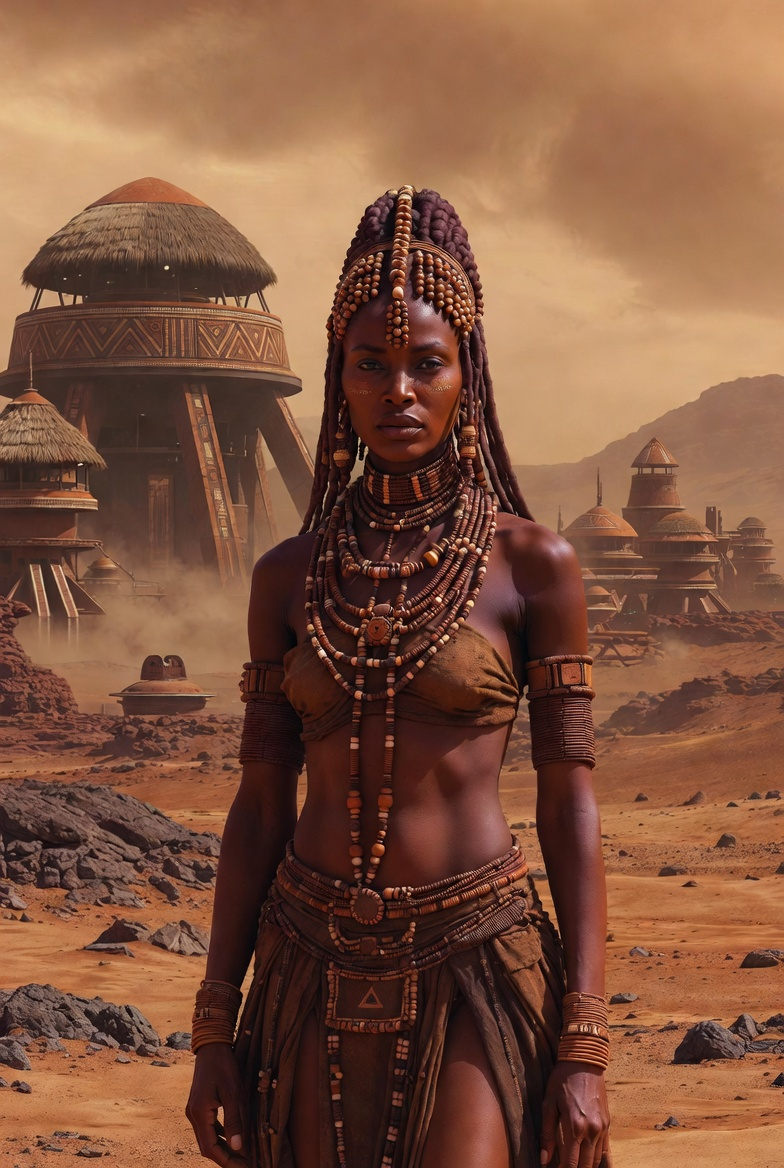
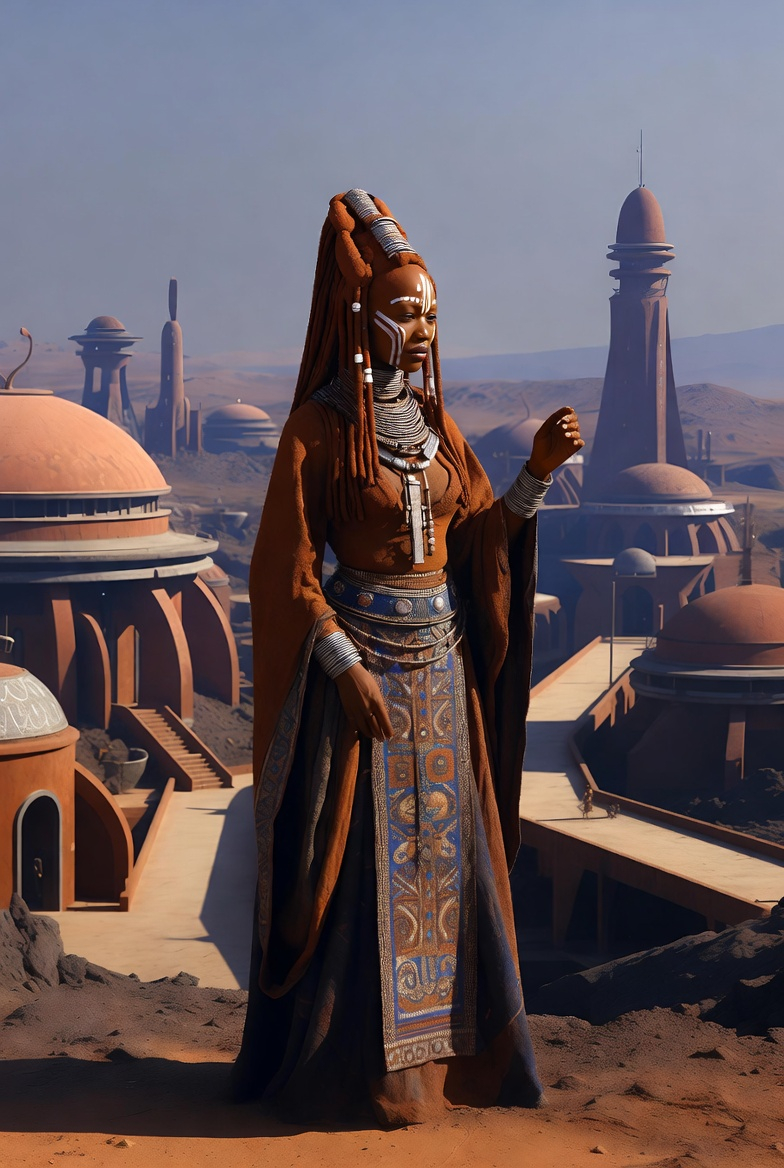
The Red Queen
The Pioneer
Queen Consort · Himba Descent · Founder of Nyekundu
Founded By
The Red Queen — Queen Consort, Himba Descent
Governance
Constitutional Monarchy — Royal authority balanced by structured governance
Primary Role
Living metal transport hub & interplanetary research
Status
Semi-autonomous — Economically dependent on Muntu
King Abenu's Role
Largely ceremonial — Political systems evolved independently
Allegiance
Martian identity — Few maintain direct ties to Muntu
Autonomy vs. Dependence
Nyekundu seeks recognition as a sovereign state, yet remains economically dependent on Muntu through interplanetary trade and resource infrastructure. Every step toward independence tightens the economic leash.
Identity vs. Origin
Many Nyekundu citizens were born on Mars and have never set foot on Earth. They do not identify as Muntu — they are Martians. A new culture has emerged, blending multiple Earth origins with planetary realities.
Vision vs. Division
The Red Queen is seen by some as a visionary pioneer who secured Muntu's interplanetary future. By others, she is a disruptive force whose ambitions set the stage for a fractured civilization.
MOYO
FERUM
LIVING METAL · THE FOUNDATION OF MUNTU'S POWER
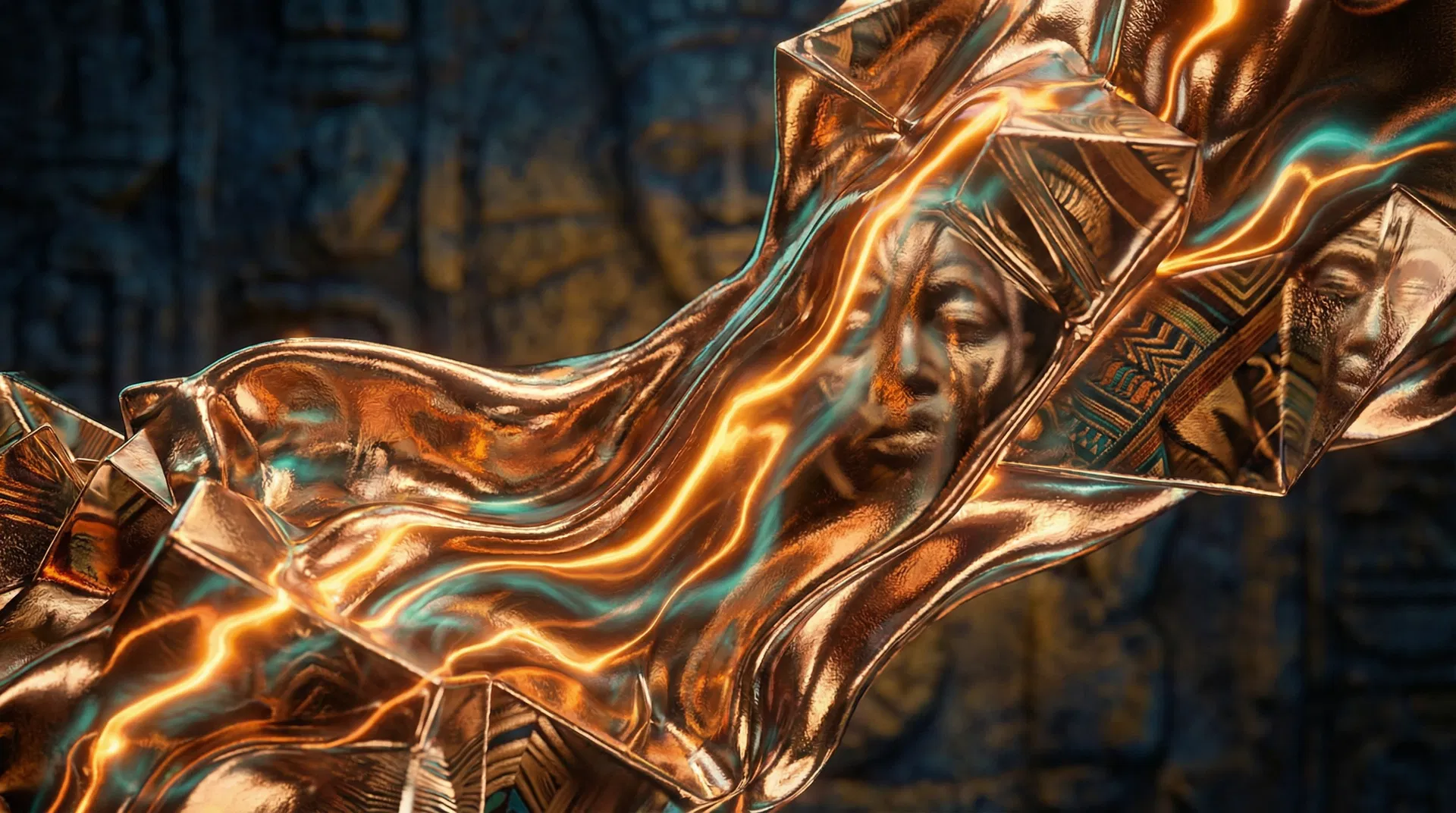
Energy Signature
ACTIVE · SENTIENT
Moyo Ferum is not merely a resource — it is the heartbeat of the Muntu civilization. A rare, semi-sentient material sourced from Elyrion, it blurs the line between technology and life. It powers cities, weapons, and infrastructure. It responds to human interaction — especially to lineage and spiritual alignment.
Those of pure lineage and strong spiritual alignment can interface with Moyo Ferum at a deeper level — commanding it, shaping it, drawing power from it that others cannot access. This is why control of Moyo Ferum is not merely economic. It is existential. Control of Moyo Ferum is control of the future.
Elyrion
Sourced from the mineral-rich depths of Elyrion — a region of the empire where the boundary between earth and energy is thinnest.
Semi-Sentient
Moyo Ferum is not merely metal — it is alive. It responds to human interaction, particularly to lineage and spiritual alignment. The worthy feel it pulse.
Universal Power
Powers cities, weapons, and infrastructure across the empire. From the lights of Mukalenga Prime to the engines of off-world colony ships.
Control = Future
Control of Moyo Ferum is control of the empire's future. It is the most contested resource in the known world — and the most dangerous.
"Control of Moyo Ferum is control of the future."
— Muntu Universe Codex, Volume I
THE
NZALI
SACRED ORDER · DREAMWALKERS · SPIRITUAL INTERMEDIARIES
"The Nzali do not seek power. They seek truth. And in the Muntu Universe, truth is the most dangerous thing of all."
The Nzali are a sacred order of dreamwalkers and spiritual intermediaries. They do not hold political power and cannot dethrone rulers. Yet their influence is subtle and critical — especially in matters involving destiny, ancestral judgment, and the balance between the physical and unseen realms.
They serve as advisors on spiritual, ancestral, and metaphysical matters. The Nzali are the empire's conscience — the voice of the ancestors in a world increasingly seduced by power and technology. A civilization that silences its Nzali silences its own soul.
Destiny
Ancestral Judgment
Balance
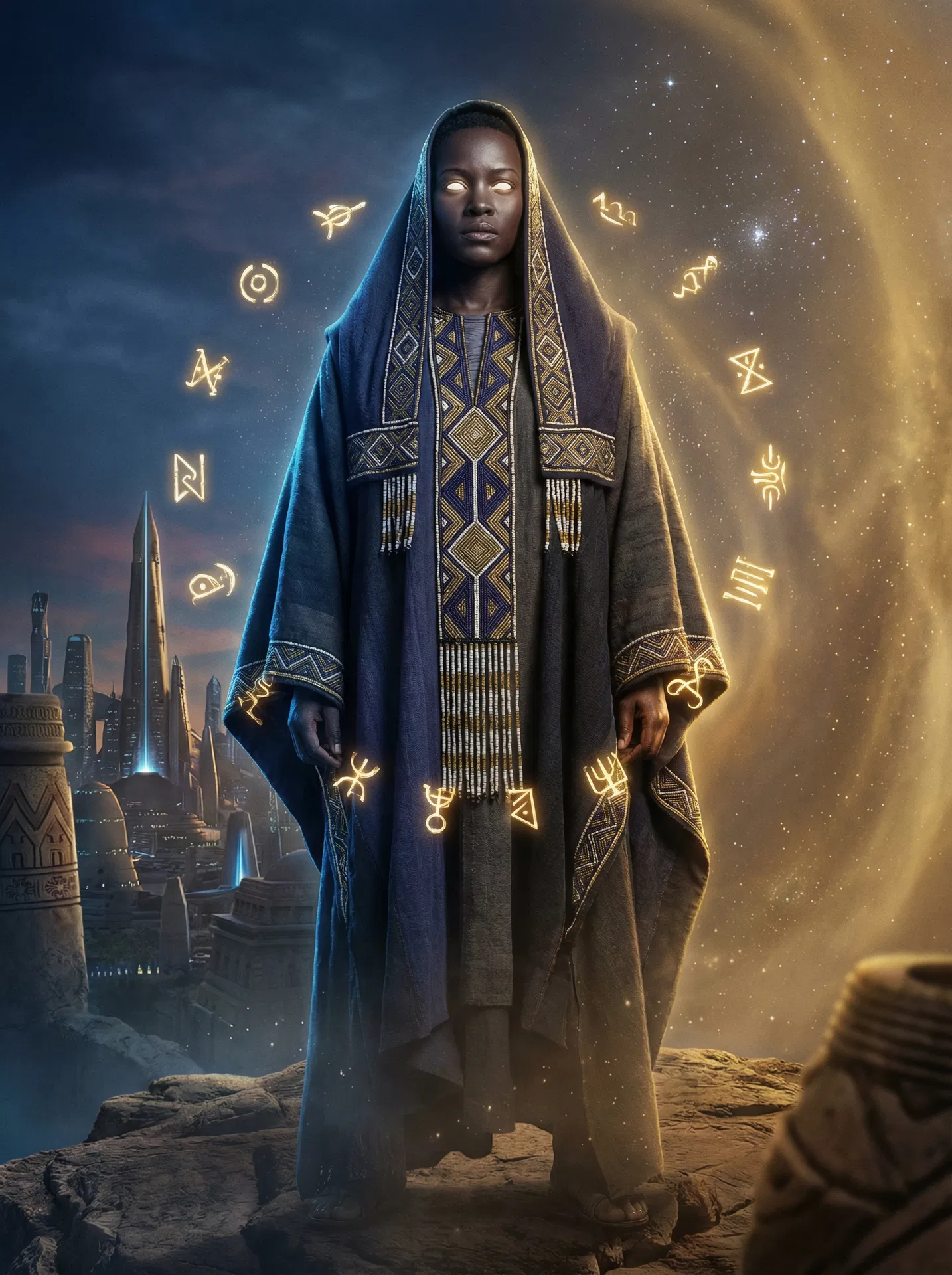
Dreamwalkers
The Nzali can traverse the boundary between the physical world and the unseen realm. In the dream-state, they commune with ancestors, read the threads of destiny, and perceive what is hidden from mortal sight.
Spiritual Intermediaries
They serve as the bridge between the living and the ancestral realm. When the empire faces decisions of great consequence, the Nzali are consulted — not commanded.
Advisors to Power
The Nzali hold no political power and cannot dethrone rulers. But their counsel shapes the decisions of those who do. A ruler who ignores the Nzali ignores the ancestors — at their peril.
Keepers of Balance
Their primary function is maintaining the balance between the physical and unseen realms. When that balance is disturbed — by ambition, by war, by the misuse of Moyo Ferum — the Nzali are the first to know.
CONFLICT
FOUNDATIONS
The Muntu Universe is driven by layered tensions — internal, spiritual, and territorial. No conflict exists in isolation. Every war is also a spiritual crisis. Every political rivalry is also a battle for ancestral legitimacy.
Internal Conflicts
The Founding Civil War
Muntu was not born in peace. After the Great War, a civil war erupted between republic loyalists who sought to restore modern states and royalists who rejected those systems as ones that had never truly served them. The royalists prevailed — but the ideological wound never fully healed.
The Nganda Rivalries
The Seven Nganda are in constant competition for dominance over the Throne of rotational monarchy. Political manipulation, legacy-building, and strategic alliances define the internal landscape of the empire.
Legacy & Succession
Who has the right to rule? Succession disputes are rarely simple — lineage, spiritual alignment, and political power all play roles in determining who is worthy of the Throne under the system of rotational monarchy.
Spiritual Conflicts
Destiny vs. Ambition
The Nzali's interpretations of destiny frequently conflict with the ambitions of the ruling Nganda. When the ancestors speak one path and a Nganda desires another, something must give.
The Ancestral Will
The will of ancestors versus human ambition is the oldest conflict in the Muntu Universe. Some rulers honor the ancestral covenant; others believe they can forge their own destiny.
Moyo Ferum & Spirituality
As Moyo Ferum becomes more central to power, the question of its spiritual nature intensifies. Is it a gift from the ancestors — or a force that will ultimately corrupt those who wield it?
Territorial Conflicts
The Red Verge
The Great War had lasting effects. Some individuals began to change — developing abilities or conditions that were not fully understood. Fear and uncertainty led to these individuals, along with others deemed dangerous or incompatible, being exiled to a harsh, lawless wasteland: the Red Verge. The consequences of that choice continue to linger beneath the surface of the empire.
Off-World Expansion
The Mars and Moon colonies represent the empire's future — and a new arena for Nganda rivalry. Who controls the off-world colonies controls the empire's next century.
Moyo Ferum Access
Access to and control of Moyo Ferum deposits is the most strategically vital territorial conflict. The Nganda that controls the supply controls the empire's power source.
Core Tensions
The empire advances technologically while its identity remains rooted in ancestral custom. The two are not always compatible.
The ideological divide that caused the founding civil war never disappeared. Descendants of republic loyalists still exist within the empire, and their dissatisfaction simmers beneath the surface.
Those cast into the Red Verge were not always criminals. Some were simply different. The question of whether Muntu made the right choice in exile — and what the exiled may become — haunts the empire's conscience.
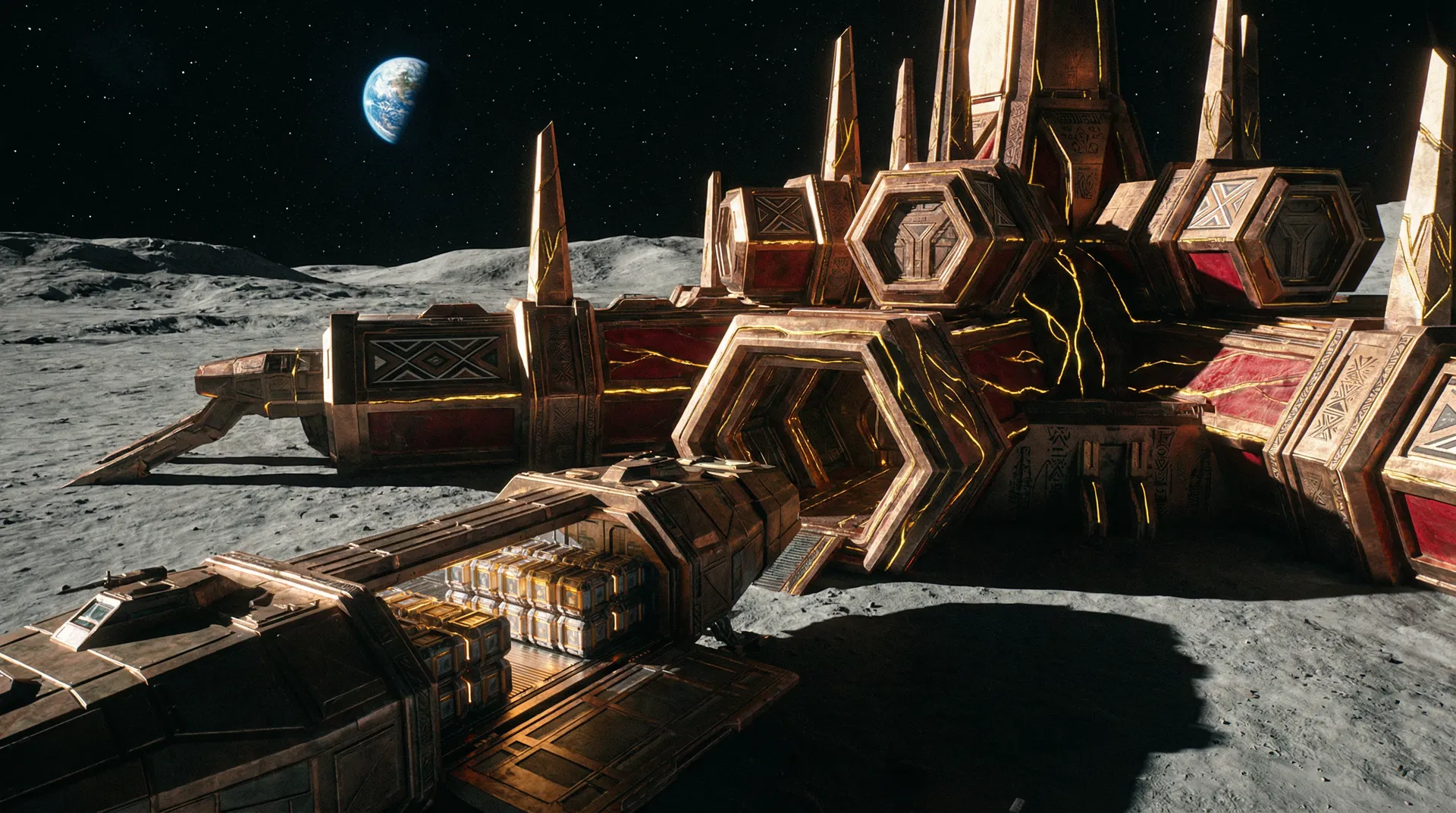
THE UMWE
SOVEREIGN RESERVE CURRENCY · MOON BASE · ELYRION PACT
The Umwe — derived from the concept of oneness — is not a trade-driven currency. It is a sovereign reserve currency, designed for stability, control, and long-term power. It is backed by a resource that cannot be replicated, synthesized, or stolen without consequence.
The Umwe functions as a closed, high-trust currency — strengthened by scarcity, discipline, and the Elyrion Alliance. No raw material is exported. No dependency on foreign markets exists. Limited external Umwe circulation ensures that its value is never subject to the volatility of the outside world.
Living Metal Properties

UMWE (UMW)
Official Currency of Muntu
Unity
Derived from 'oneness' — the Umwe reflects the unity of the Seven Nganda under a single sovereign civilization.
Stewardship
The living metal is never sold, exported, or traded. It is protected and used for advancement — not exploitation.
Loyalty
The Elyrion–Muntu Pact is built on mutual protection. Any misuse of the metal risks immediate termination of access.
Scarcity
The Umwe's strength comes from what it cannot be: replicated, diluted, or compromised by foreign markets.
The Supply Chain
Living metal is extracted from Elyrion's mineral-rich depths — the only known source in the known world.
The metal is stabilized in secure containment units before transport. Unstabilized metal is volatile and unpredictable.
Sealed cargo vessels travel interplanetary routes under armed escort by Muntu's specialized task force.
The Moon Base is the primary transfer point — and the most contested location in the entire supply chain due to its neutral status.
A portion of the metal is routed to the Mars Colony for advanced research and off-world infrastructure development.
The bulk is transported to Muntu's Earth reserves, powering cities, weapons, and the Umwe currency itself.
Threat Landscape
Because the living metal cannot be replicated or mined elsewhere, the only way rivals can obtain it is through theft. Muntu operates a specialized interplanetary task force to protect every point in the supply chain.
Space Piracy
Foreign-backed piracy operations target interplanetary shipments between Elyrion and the Moon Base.
Lunar Interception
Covert interception attempts at lunar checkpoints exploit the Moon Base's neutral territorial status.
Industrial Espionage
State-level espionage operations target Muntu's processing technology — the only way to use the metal without the Pact.
"The Umwe is not just currency — it is a reflection of Muntu's philosophy, power, and interplanetary alliances. Unity over division. Stewardship over exploitation. Loyalty over opportunism."
— Muntu Universe Codex, Volume II
Beyond the Wall
The Red Verge
Beyond Mukalenga Prime's wall lies the desert of outcasts, pirates, and pact-clans. Where water is currency and the empire's wealthy pay in secrets.