THE SEVEN
NGANDA
Nganda — Bemba for "House" · Nganda Ya — "House of"
Seven elite Nganda, each with distinct cultural identity, internal governance systems, and unique philosophies of power. They rotate and compete for dominance over the Throne of Muntu — but when one rules, all must submit to the higher doctrine.
Military & Defense
Nganda Ya Ndlovu
The Unbreakable
The oldest and most battle-hardened of the Seven Nganda. When the royalists prevailed in the civil war that forged Muntu, it was Nganda Ya Ndlovu that held the line. They command the empire's military forces and have held the Throne more times than any other. Their philosophy of endurance and strength has shaped the empire's martial identity since the Great War.
"Strength through endurance. The mountain does not move — the storm passes."
TAP TO REVEAL ↓
Moyo Ferum & Technology
Nganda Ya Elyrion
The Awakened
The custodians of Moyo Ferum — the living metal that powers the empire. Through the Elyrion–Muntu Pact, this Nganda controls exclusive access to the living metal that backs the Umwe and fuels Muntu's technological supremacy. Their mastery of Moyo Ferum makes them indispensable to the empire's survival.
"Moyo Ferum does not serve the unworthy. Lineage is the key that unlocks power."
TAP TO REVEAL ↓
Governance, Law & Elite Guard
Nganda Ya Kuyiko
The Architects of Order
After the civil war between republic loyalists and royalists, it was Nganda Ya Kuyiko that designed the system of rotational monarchy — a governance structure rooted in cultural memory and reimagined traditional leadership. They are the architects of the Royal Protocol itself. Of the ten monarchs in Muntu's 230-year history, six have come from Kuyiko — more than any other Nganda combined.
Kuyiko is strictly patriarchal. Only men can rule. Leadership is proven through combat — the Trials of Muntu are structured around the kind of physical and strategic dominance that Kuyiko trains its men for from birth. Polygamy is practiced and accepted within the Nganda. Queen Consorts hold real power — they are strategic, influential, and far from submissive — but outsiders who marry into Kuyiko must fully assimilate into its culture. There is no middle ground.
Kuyiko is also home to the most elite and storied warrior unit in the empire: the Vitiligo Archers. Born with vitiligo — a condition that once drew fear and superstition — these women were nearly exiled to the Red Verge. King Asande, whose own mother bore vitiligo, intervened with a royal decree: every girl born with vitiligo would be trained as an archer and mixed martial artist, transforming the persecuted into the protected — and the protected into the most feared warriors in Muntu. King Asande is the current ruler. His daughter is said to be challenging Kuyiko's male-only succession — a tension that has no precedent in the Nganda's history.
King Asande's Decree
"Every girl born with vitiligo shall be trained as an archer and a warrior. What others feared, Muntu shall honour."
"Order is not imposed — it is designed. The law is the empire's living architecture."
TAP TO REVEAL ↓
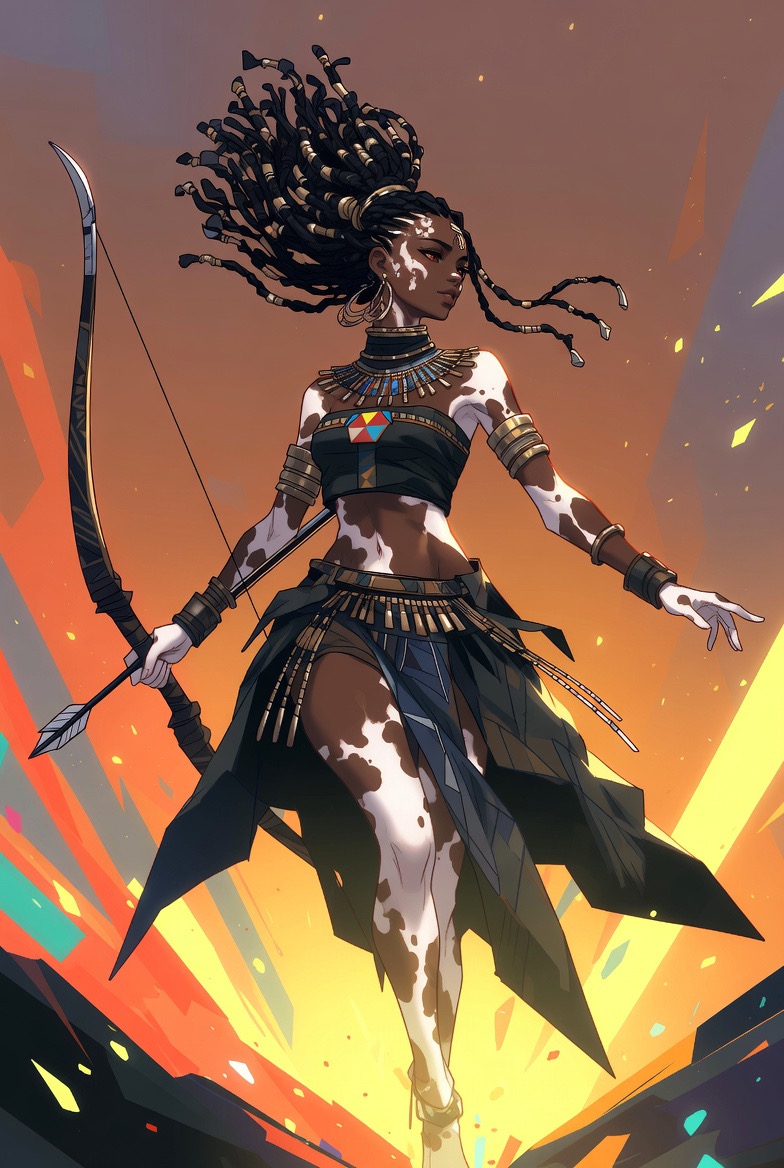
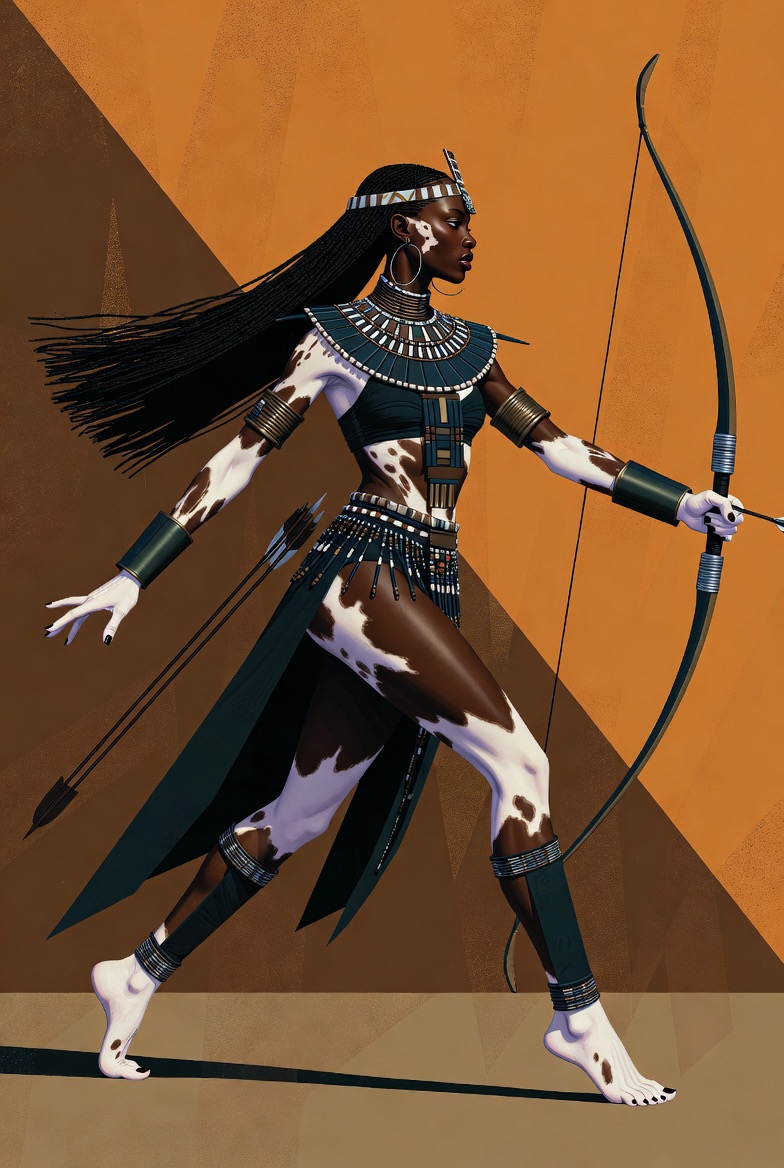
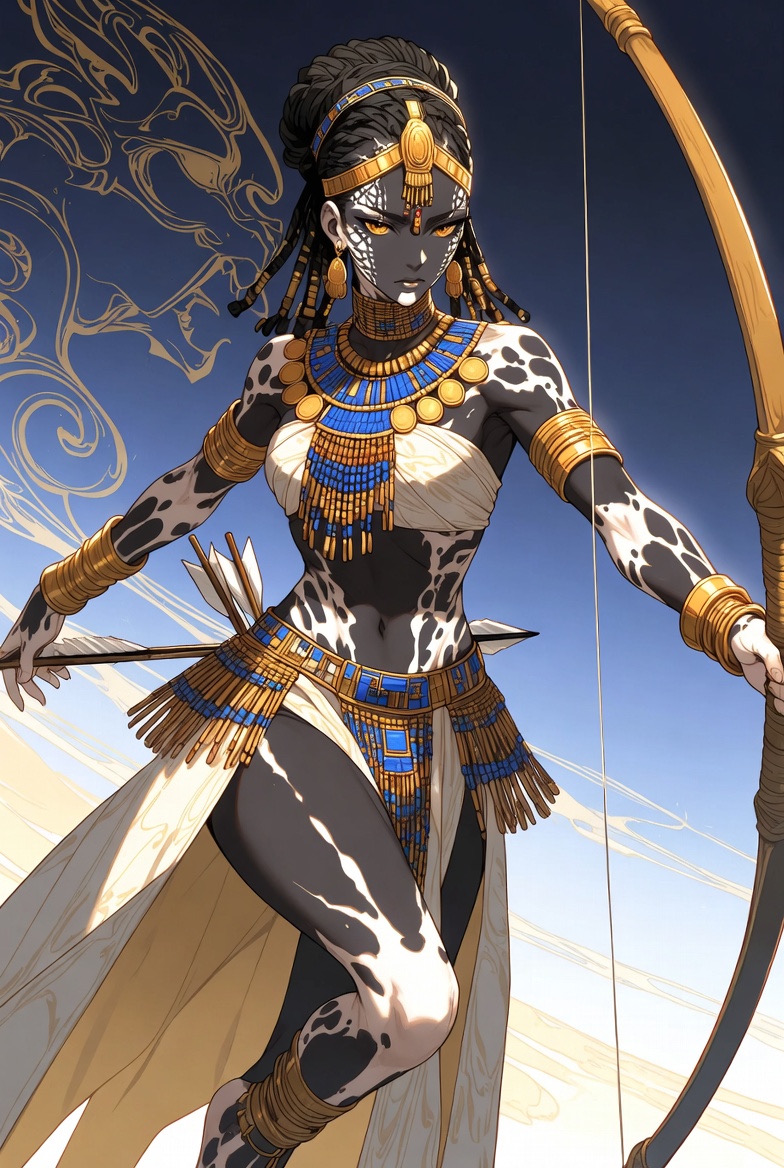
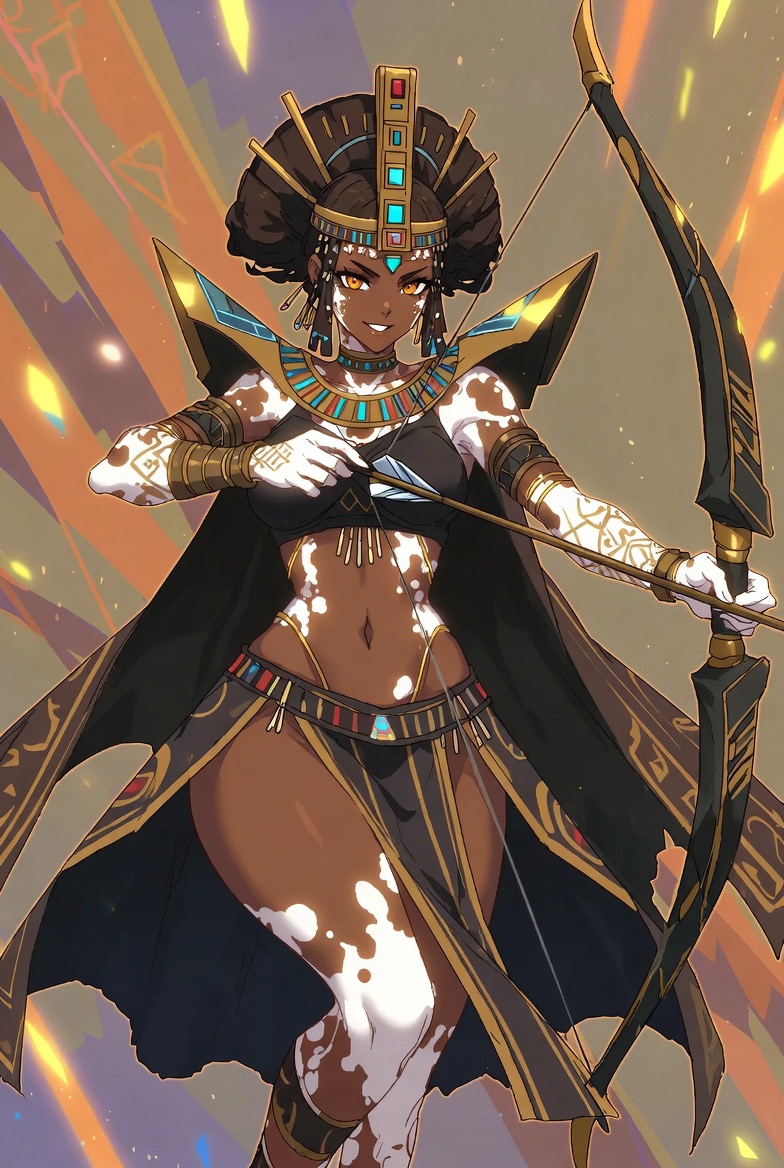
Vitiligo Archer Corps
The Windborn
The Chosen
Agriculture, Diplomacy & Sanctuary
Nganda Ya Khaleni
The Indispensable
Nganda Ya Khaleni was not born from conquest — it was born from a queen's conscience. During the Founding Civil War, a community of believers fleeing persecution petitioned the reigning king for sanctuary. He refused. His Queen Consort, Queen Shatani, herself a believer, invoked ubuntu: "A king who rules only some of his people has already divided his kingdom." The crown relented. Land was granted. Khaleni City was established — beginning as an underdeveloped refuge and becoming, over generations, one of the most strategically vital civilizations in the empire. Queen Shatani is revered across all Nganda as the moral root of Khaleni — the reason it exists.
Khaleni's power is not military. It is not financial in the conventional sense. It is agricultural and logistical. They are the empire's food system — farming tomatoes, African bird's eye chili, and large-scale sustainable crops that feed both Earth and off-world populations. When Muntu expanded to the Moon Base and Nyekundu (Mars), Khaleni solved the problem no other Nganda could: food preservation beyond Earth. Traditional methods failed under vacuum conditions, long-duration transport, and radiation exposure. Khaleni's advanced preservation system — still considered proprietary — keeps food viable across all of Muntu's off-world territories. Without it, Muntu's expansion would have stalled.
Queen Shatani's Invocation
"A king who rules only some of his people has already divided his kingdom."
Khaleni also functions as the empire's neutral ground. They engage all sides, align with none fully, and quietly shelter displaced citizens — including, at times, Red Verge escapees. This draws suspicion from Nganda Ya Kuyiko, who sees it as a security risk. Tao respects their independence. The Nzali believe Khaleni may be closer to ancestral balance than any other Nganda.
Governance in Khaleni is unlike any other Nganda. Internally, Khaleni is led by a Governor — not a King or Queen. Spiritual leaders, agricultural heads, and civic councils share authority in a collective model. The title of King or Queen only applies when Khaleni enters the Trials of Muntu and must conform to the empire's throne system. Of Muntu's ten monarchs, three have come from Khaleni. Their diplomatic and spiritual leadership style, however, is structurally disadvantaged in the combat-focused Trials. The current Governor is Thami.
"We keep what others discard… and make it indispensable."
Colors
Earth Green & Terracotta
Identity Markings
None required — identity is communal, not sovereign
Succession & Throne
Internal: Governor + collective council. External (Trials): King or Queen title adopted to conform to the Royal Protocol. 3 kings, 0 queens in Throne history.
TAP TO REVEAL ↓
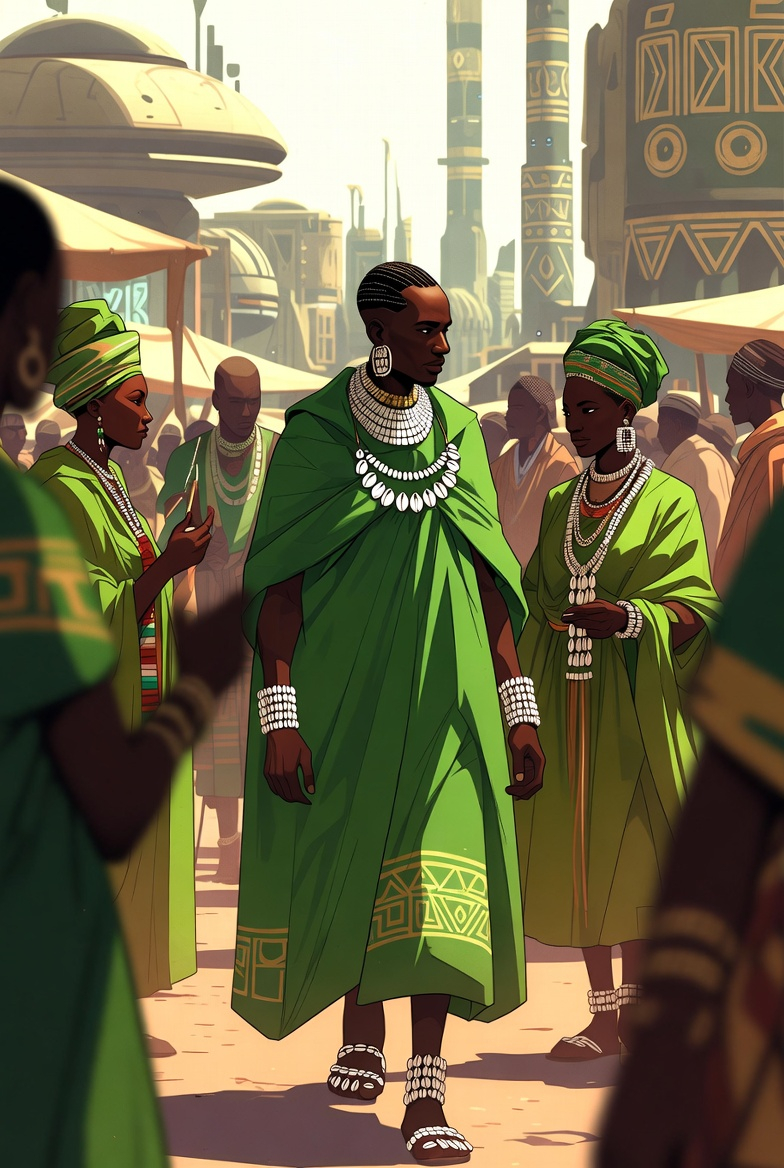
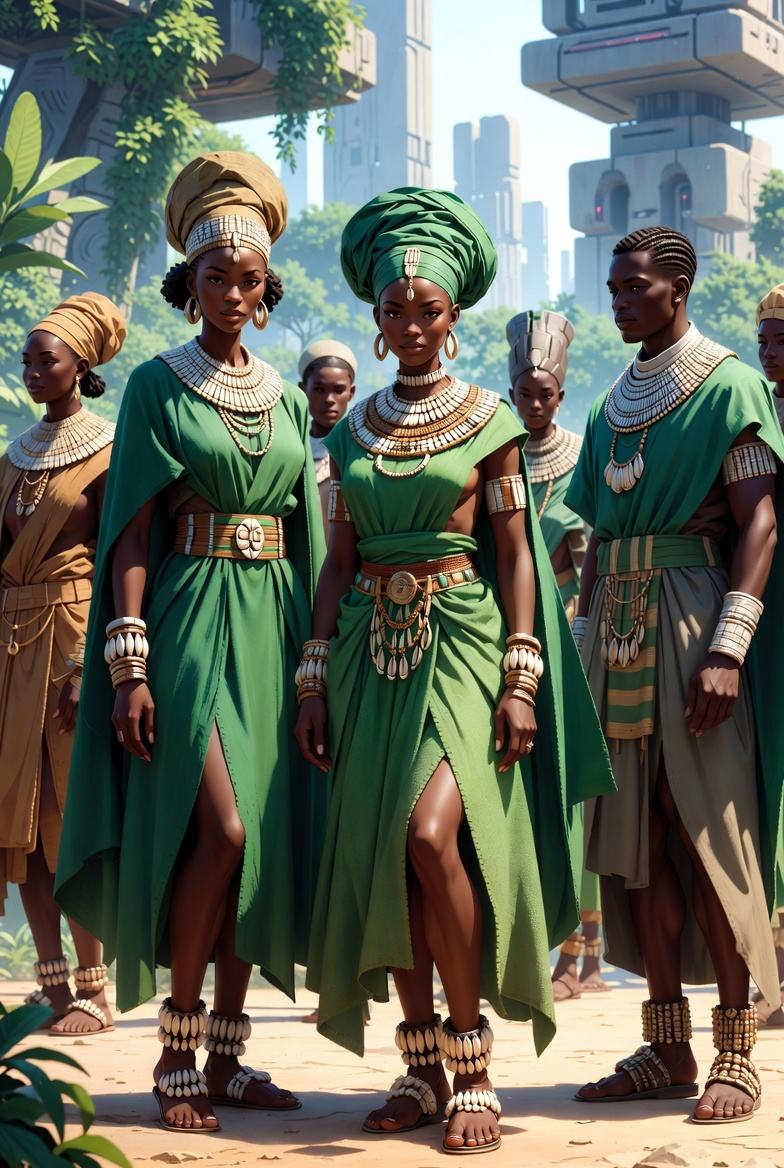
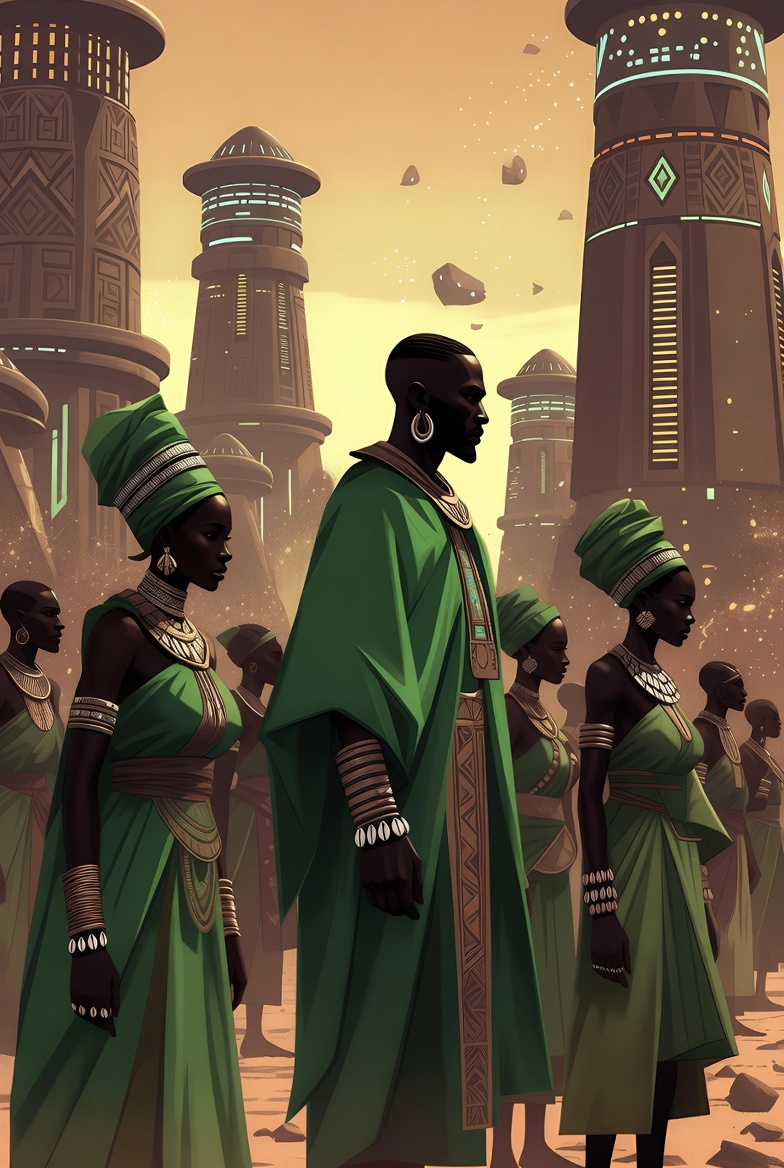
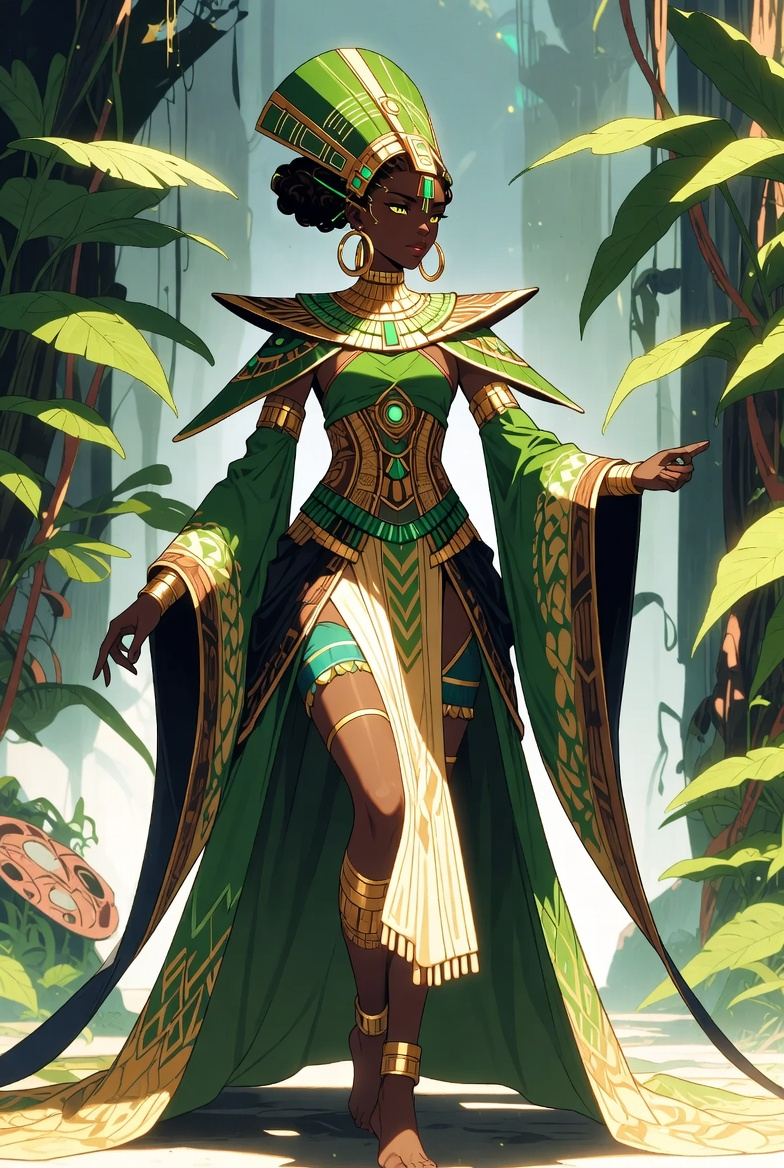
Nganda Ya Khaleni
The Khaleni Market — Heart of the Sanctuary City
Sanctuary City
Sovereign Matriarchy & Political Governance
Nganda Ya Tao
The Matriarchs of Deliberate Power
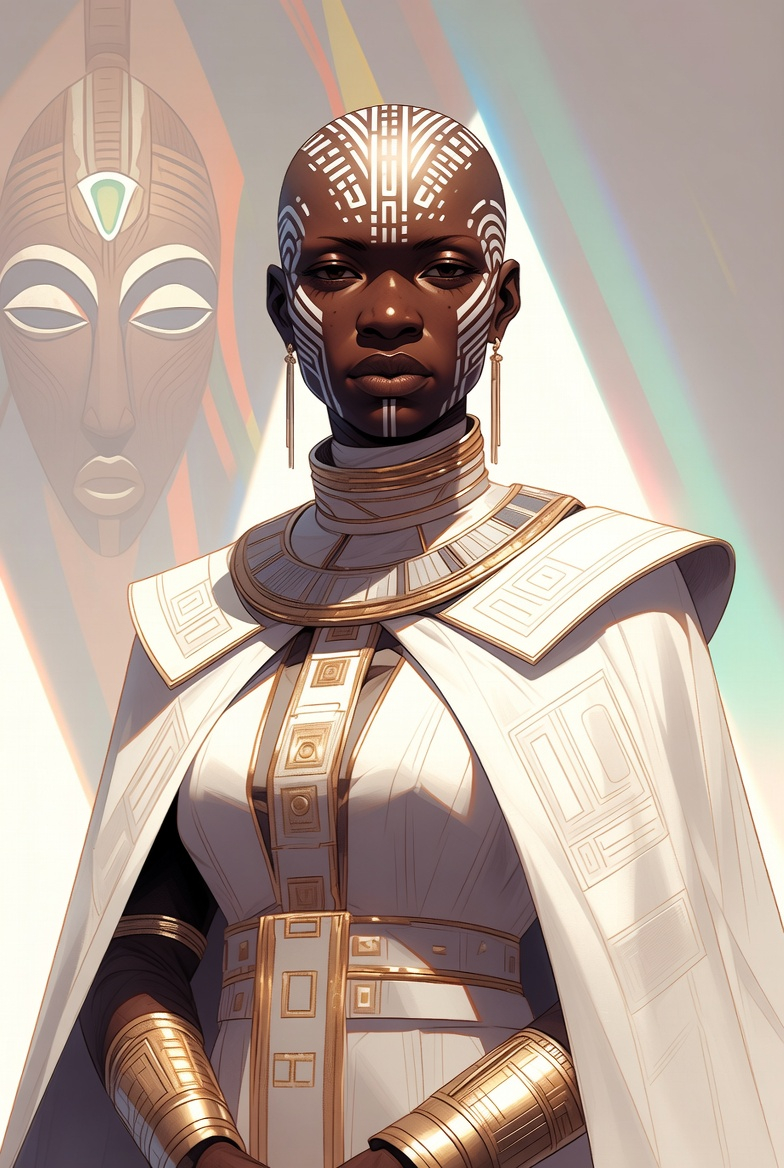
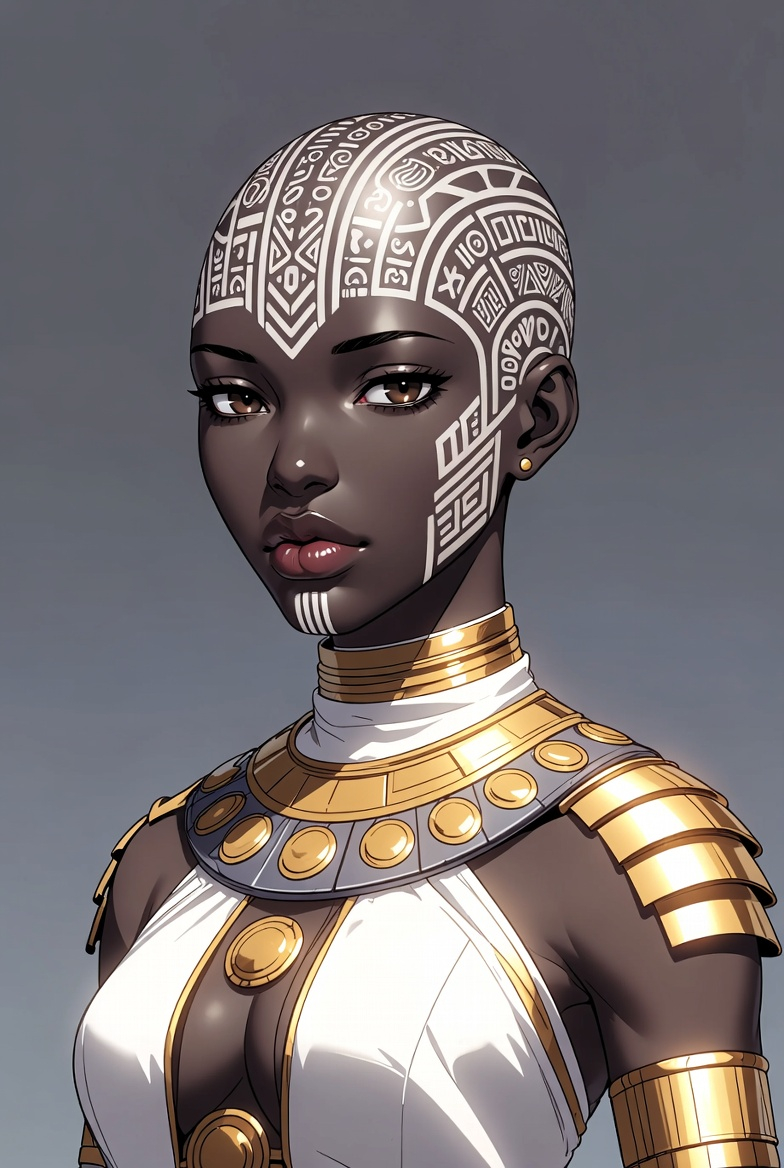
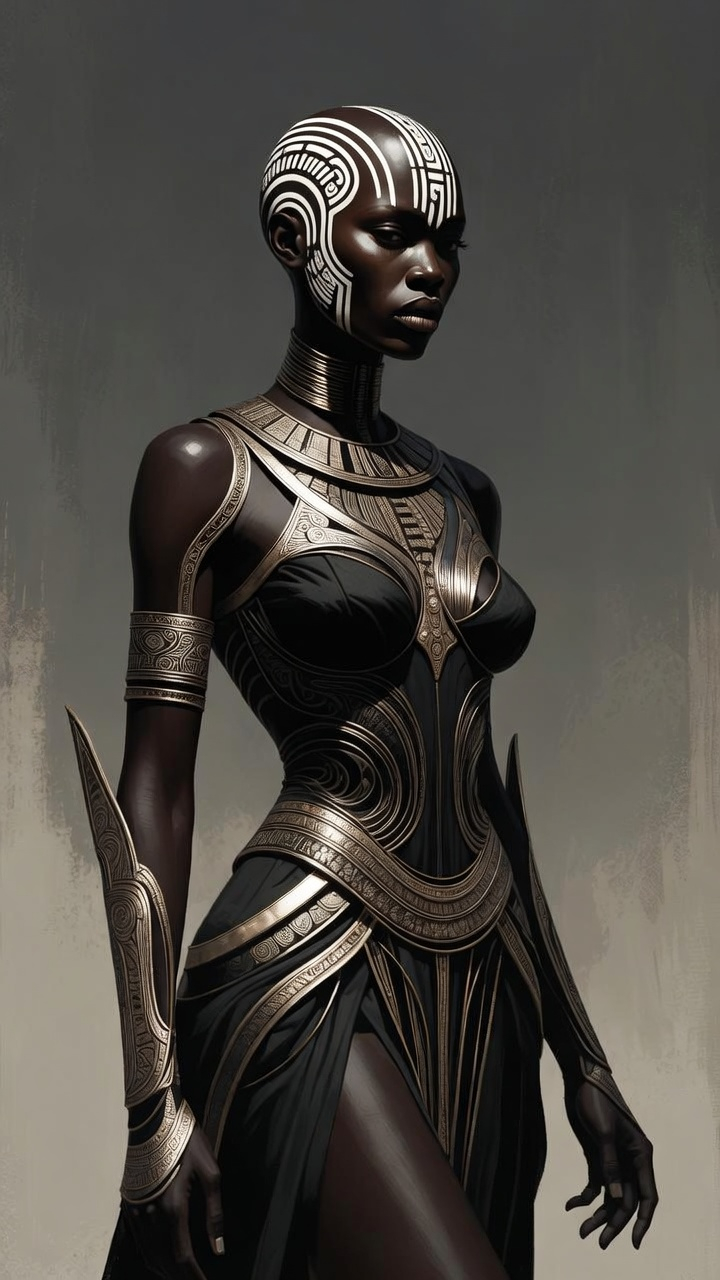
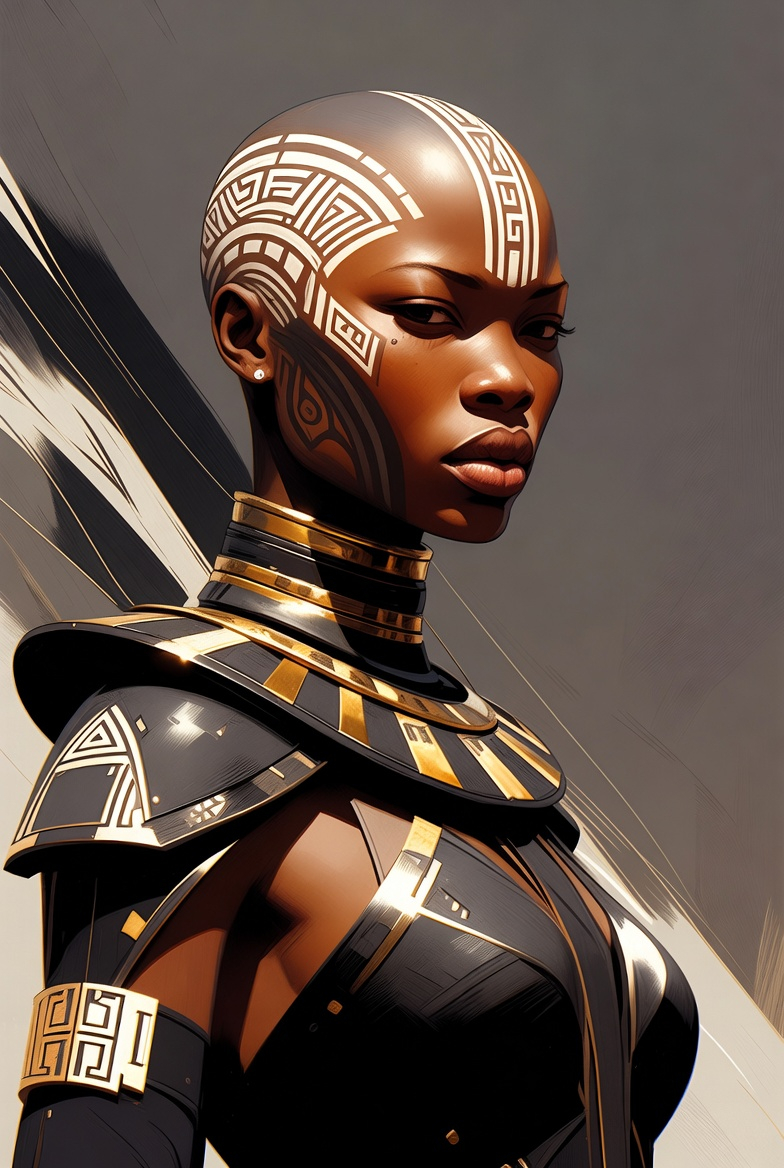
Nganda Ya Tao is built on a single sovereign principle: women must be visibly central to power. It is not anti-male — men hold influence as advisors, generals, and strategists — but sovereign authority is intentionally embodied by one woman: the Matriarch. She is the only eligible representative of Tao for the Throne of Muntu, always marked by three defining traits: a shaved head, white and gold regalia, and a white ink tattoo of her own unique design, visible at all times. Every woman who enters training for the Matriarch seat is shaved bald — a mark of commitment and equality. All candidates begin the same. From the full field of contenders, three are selected to advance to the Final Cut: the most capable, the most tested, the most ready. These three are painted with a temporary white paint — a visible declaration that they are in contention for the highest seat in Tao. When one of the three wins, she ascends to Matriarch. Her white paint is then made permanent: she chooses a unique design and it is tattooed in white ink across her skin. The design is entirely her own — no two Matriarchs have ever worn the same mark. She carries it until she dies or willingly surrenders her seat to allow the next Matriarch to rise. The black mark is the inverse of everything the white represents. When a candidate or sitting Matriarch breaks Tao's values and doctrines — bringing shame upon the Nganda — the white paint or white ink is not simply removed. It is replaced. They are marked with black ink as a permanent declaration: this person has been deposed. Whether they were a contender or a ruling Matriarch, the black ink means the same thing. They are stripped of standing, stripped of title, and stripped of the right to ever hold either again. It is not a punishment that can be served and completed. It is a permanent identity. In practice, Tao's role within the empire is advisory. They do not seek the Throne — they influence those who hold it. Their political power comes from counsel, moral authority, and the weight of their ancestral traditions. In 230 years of Muntu's history, only one Matriarch of Tao has ever ruled: Zara. Her ascension was not a violation of Tao's values — it was an extraordinary exception, born of extraordinary circumstances. No Matriarch of Tao has ruled since. The shadow of Zara falls across every contender. Leadership within Tao is not inherited — it is earned. Eligible contenders must prove themselves through structured internal competition. Bloodline grants access, not victory. Many Matriarchs choose not to have children to prevent the concentration of power and keep leadership open.
"Power must be seen. Leadership must be earned. Sovereignty must be embodied."
Colors
White & Gold
Marking System
Training: Shaved bald · Final Cut (3 candidates): Temporary white paint · Matriarch: Permanent white ink tattoo of her own unique design · Deposed (candidate or Matriarch): Black ink — permanent mark of broken doctrine and shame
Succession
Internal competition — not inheritance. Bloodline grants access, not victory. The Final Cut selects 3 candidates. One wins. Her white paint becomes white ink.
TAP TO REVEAL ↓
Nganda Ya Nzali
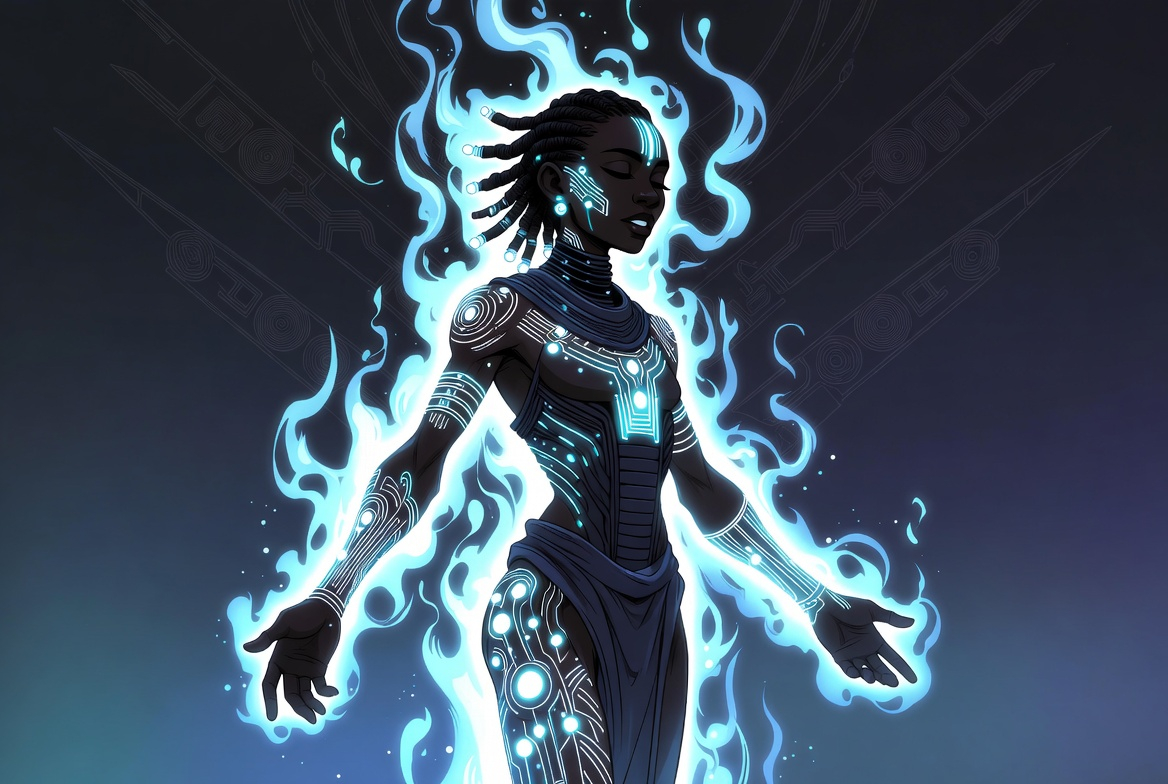
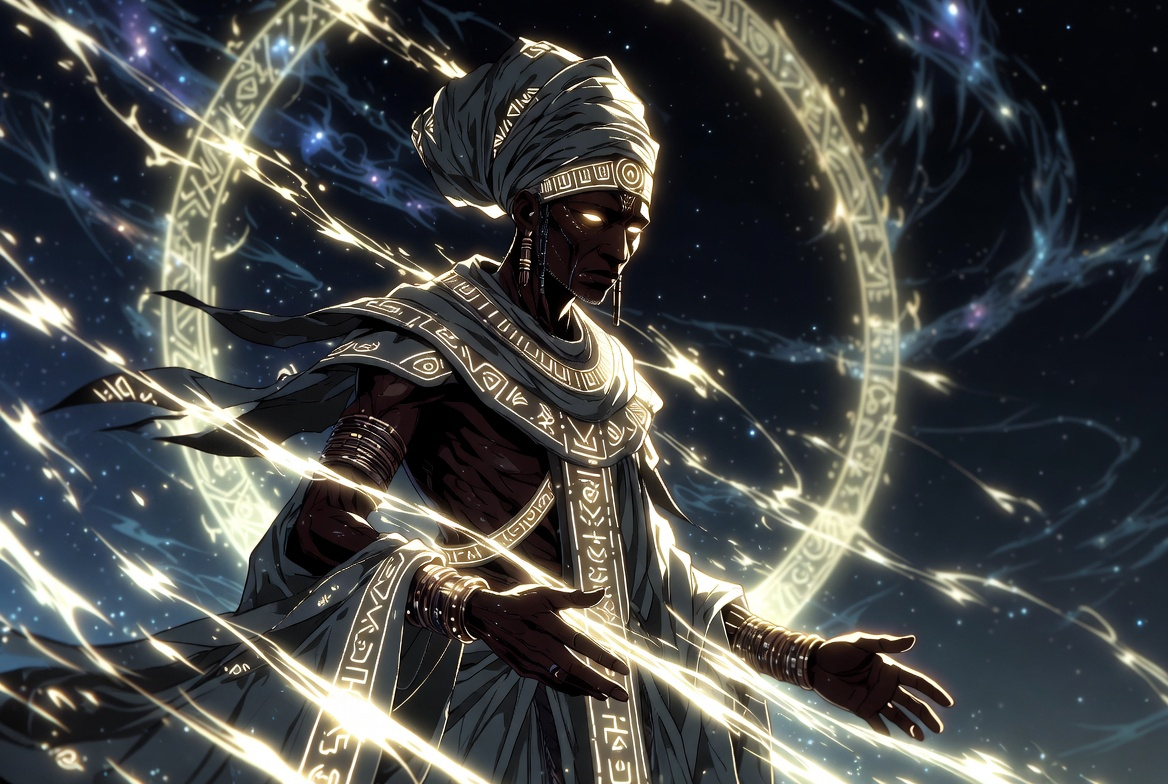
The Transcended — Ancestral Plane Entity
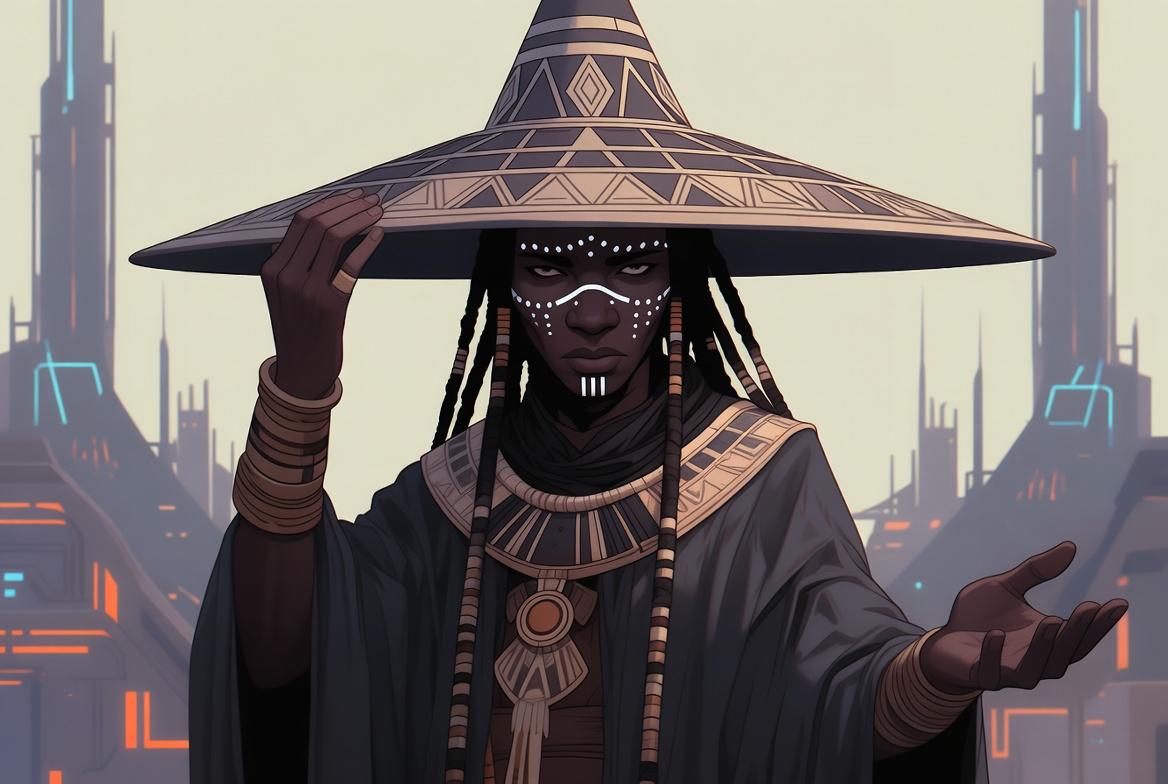
Dream Walkers
Spiritual Guidance, Ancestral Affairs & Dream Walking
Nganda Ya Nzali
The Dream Walkers
Nganda Ya Nzali are the Dream Walkers — the empire's oldest spiritual order, whose role has never changed in 230 years of Muntu's history: to advise, to guide, and to speak for the ancestors. They do not rule. They do not seek the Throne. By design and by doctrine, the Nzali believe that political power corrupts the spiritual clarity required to serve the empire honestly. Their influence is not governance — it is conscience.
The Nzali represent the old ways of speaking to the ancestors. They believe the ancestors guide the spirit of the living, and that their sacred duty is to maintain that channel — pure, uncorrupted, and free from personal ambition. In the old days, the Nzali resolved that people had worked charms against one another, binding generations in cycles of poverty and harm. From that reckoning, they made a vow: their knowledge would only be used to advance Muntu and guide the families they were selected to serve. Any Nzali who practices dark arts, blood magic, or forbidden craft is disowned by the community and exiled to the Red Verge. It is considered high treason.
There are two tiers of Nzali practice. Family Nzali are community-chosen advisors — selected by families across all Nganda to provide spiritual guidance, ancestral interpretation, and counsel across generations. Royal Nzali sit in the imperial court, offering direct spiritual guidance to the sitting ruler. Their presence in the throne room is ancient and considered non-negotiable by tradition — until now.
The Transcendence
"The more a Nzali practices dream walking, the further they move between worlds. At a certain threshold, they may leave their body and enter the ancestral plane permanently — becoming a guardian spirit. Once they cross over, they cannot return."
The Nzali's deepest secret is transcendence. The more a Nzali practices dream walking, the further they move between the physical world and the ancestral plane. At a certain threshold, a Nzali may choose to leave their body entirely and enter the ancestral plane as a permanent entity — a house protector, a guardian against evil and wicked spirits. Once they cross over, they cannot return. Time does not work the same on the ancestral plane. They are not gods. They are simply higher in spirit than ordinary people — elevated through practice, not birth.
Not all who transcend choose good. There are transcended Nzali who chose darkness, and those who chose light act as guardians against them. This unseen war in the ancestral plane runs parallel to every political conflict in Muntu's history.
The Nzali's most dangerous political tension is with Nganda Ya Khaleni. Khaleni believes these arts are forbidden — that there is only one God who can protect, and that the Nzali's practices are a dangerous counterfeit of true spiritual authority. When a Khaleni royal takes the Throne, the Nzali do not simply withdraw their support. They actively work to depose them. Queen Kana's reign has reignited this conflict.
"The ancestors do not shout — they whisper through those who have learned to be still."
Tiers
Family Nzali (community-chosen) · Royal Nzali (court advisors)
Exile Rule
Dark arts, blood magic, or forbidden practice = exile to the Red Verge. High treason.
Current Political Conflict
Actively seek to depose Khaleni rulers. Currently mobilised against Queen Kana.
TAP TO REVEAL ↓
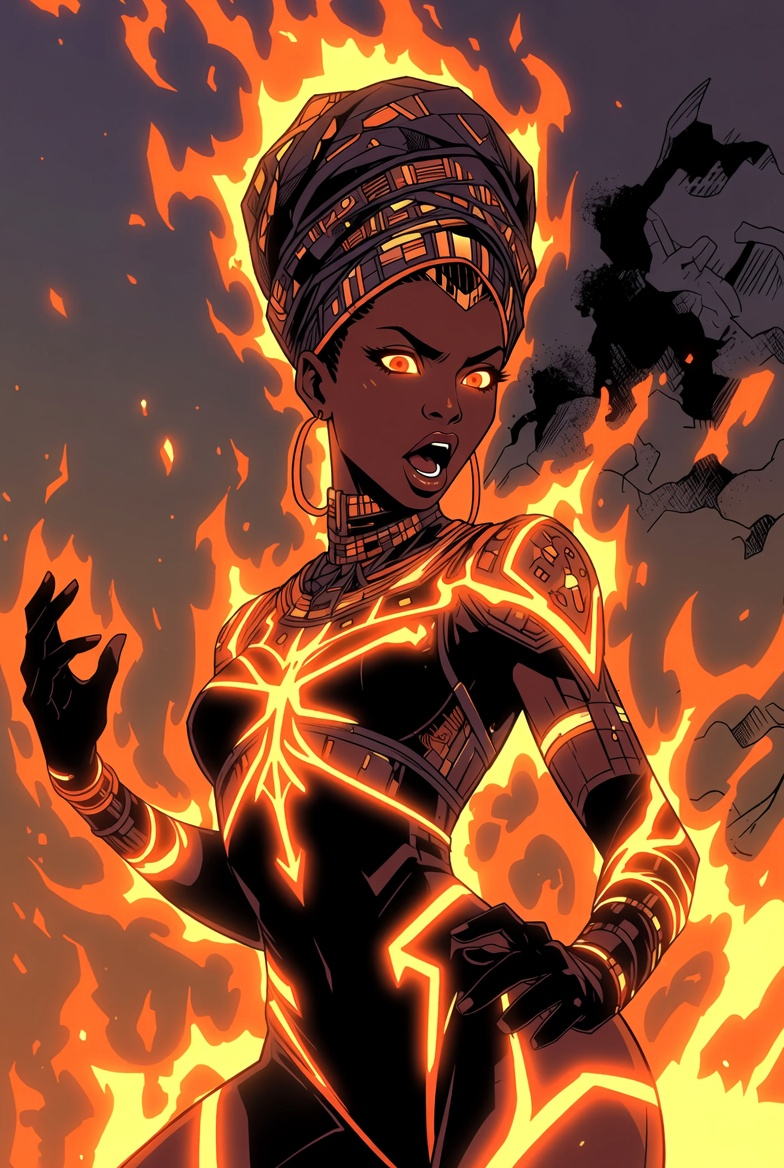
Nganda Ya Mulilo
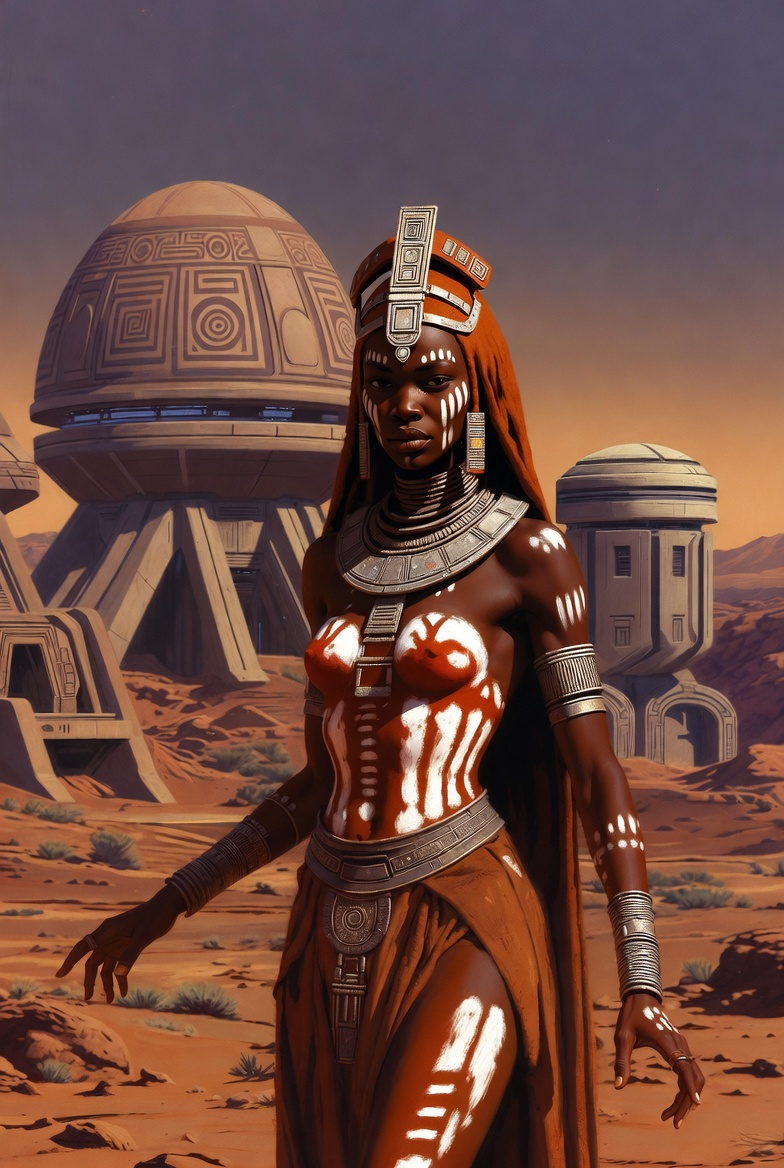
The Ishiwi — Keeper of Flame & Memory
Secretive Order
Memory, Archives & Oral Tradition
Nganda Ya Mulilo
The Undying Flame
Nganda Ya Mulilo is the empire's memory made flesh. They are the scribes, archivists, and oral historians of Muntu — the Nganda that ensures the empire never forgets what it was, even when war tries to erase it.
Their origin is rooted in loss. The Great War and the civil war that followed destroyed much of Mulilo's own history — their ancient texts, their sacred sites, their ancestral records. What survived was fragmented. What was lost was irreplaceable. From that devastation, Mulilo made a vow: no Nganda, no people, no civilization would suffer that erasure again. They dedicated their gifts entirely to preservation.
Today, Mulilo maintains the empire's living archive. They record history through both written and oral tradition — narrating, reciting, and performing the empire's chronicles in the ancient way, while simultaneously building technologies that preserve oral tradition for future generations: voice-capture systems, ancestral memory vaults, and cross-Nganda historical networks. They are the only Nganda with unrestricted access to the records of all other Nganda.
The Ishiwi
"The one who carries the flame." A title, not a name. The Ishiwi's true name is known only to those they trust completely — a sacred act in a Nganda that guards its secrets above all else.
Mulilo believes in Mulilo — an ancient fire spirit older than the empire itself. Their faith is not a religion in the conventional sense. It is a cosmology: fire as the force that both destroys and illuminates. What the Great War burned, the spirit of Mulilo lights again. Their customs are deeply secretive. Outsiders know almost nothing of their internal rituals. There are rumours of supernatural fire abilities among their members — but Mulilo neither confirms nor denies.
Their leader holds the title of Ishiwi. It is not a name — it is a sacred title, meaning "the one who carries the flame." Mulilo members do not reveal their true names except to those they trust completely. Among themselves, they communicate in a secret language known only within the Nganda. To the outside world, they present public names — functional identities for the empire's purposes. Their true names are considered sacred, shared only as an act of profound trust.
Mulilo does not rule. They have never entered the Trials of Muntu and have no interest in the Throne. Their power is of a different kind: the power of knowing everything, and choosing what to remember.
"What fire destroys, memory rebuilds. What war erases, the Ishiwi restores."
Colors
Ember Orange & Ash Black
True Name Custom
True names are sacred — revealed only to those fully trusted. Public names used externally.
Succession & Throne
Ishiwi title passed through internal rite. No Throne participation. No Trials entry.
TAP TO REVEAL ↓
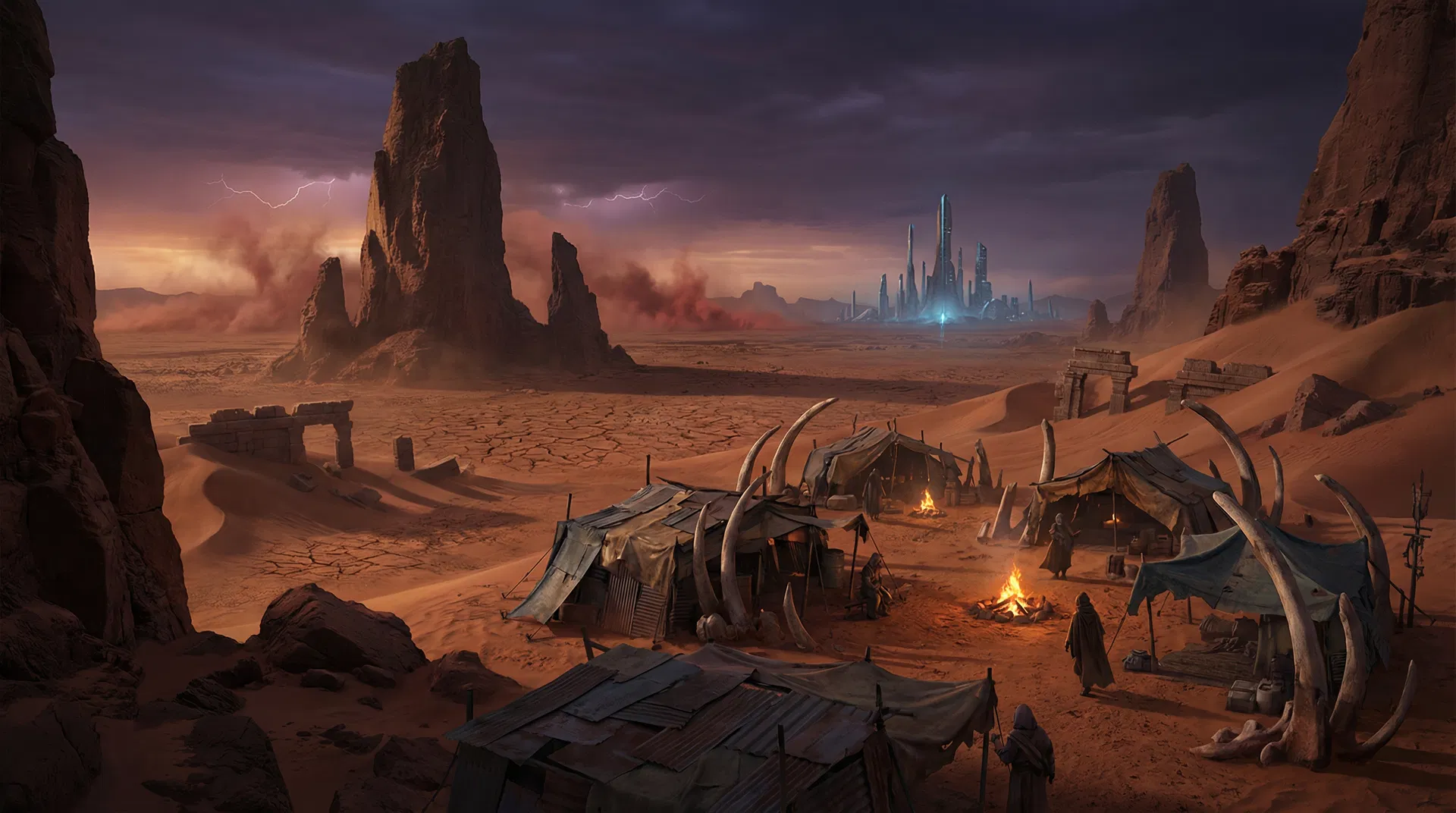
THE RED VERGE
The Red Verge is not a Nganda. It is a wasteland — a vast, desolate desert territory beyond the empire's borders where the cast-out are sent and the forgotten survive. Outcasts, mutants, and those deemed undesirable by the empire's order are exiled here.
Among those who dwell in the Red Verge are Nzali who have strayed from the sacred order — practitioners of dark magic, those who have broken the ancestral covenant, and those whose power has been deemed a threat to the balance of the empire. The Red Verge is where the empire's conscience goes to die. Or to be reborn.